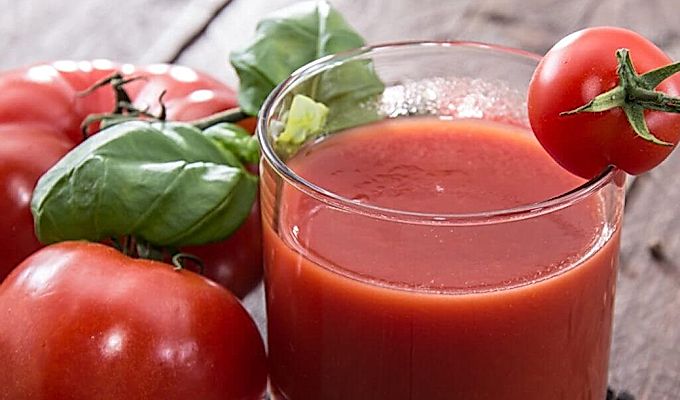
 Tomato juice is one of the most useful drinks that has a healing effect on the human body. The culture includes a huge range of biologically active substances: organic acids, vitamins, saccharides, micro- and macroelements.
Tomato juice is the record holder among vegetable nectars for the content of the antitumor substance lycopene (provitamin A) [1]
In addition to its pharmacological value, the drink has excellent taste properties. It is used in cooking both in its pure (raw) form and as an alternative to tomatoes, tomato pastes, ketchups and sauces. Considering that the production of nutritious juice does not require high-tech equipment, the product can be easily prepared by everyone [2]
- Cancer Tomatoes
- Varieties of tomato juice
- Chemical composition
- Beneficial features
- The principle of creation at home
- Tomato-based diets
- How to use it correctly
- Tomato juice in questions and answers
- Conclusion
Cancer Tomatoes
The antitumor effect of tomatoes is explained by the presence in their composition of the natural oncoprotector lycopene. This substance is included in the group of carotenoids that give tomatoes a bright scarlet color [1]
Lycopene, along with the plant pigment beta-carotene, is a precursor of vitamin A. Moreover, in terms of its antioxidant power, the anticancer dye is 2 times stronger than its “brother”. Given that oxidative stress is at the heart of tumor development, lycopene inhibits gene mutation and protects T-lymphocytes from free radical damage. In addition, the pigment resists the binding of cancer foci with endothelial cells, which prevents them from entering the bloodstream, and, therefore, disrupts the process of growth of neoplasms [3]
The leaders in lycopene content are tomatoes that have undergone minimal heat treatment (without sterilization). This phenomenon is explained by the destruction of cellular fibers (when heated), which facilitates the release of the plant pigment to the outside. In addition, when tomatoes are combined with vegetable oil, the pharmacological value of the dye doubles.
For the prevention of cancer, it is enough to consume 10-15 mg of pure lycopene per day. This portion of the substance is contained in 500 ml of tomato juice (natural) or 500 g of fresh tomatoes.
 Interesting results were obtained by American scientists from the Detroit Cancer Institute, who observed patients with prostate cancer (in the early stages). Moreover, all patients were in the same condition and were preparing for the operation. Before the start of the experiment, the patients were analyzed to determine the specific antigen of the prostate (FAP), and then they were divided into 2 groups identical in all parameters. Patients from the first category consumed 15 mg of lycopene twice a day, while those from the second did not receive pigment. After 30 days, a blood test from patients taking the antioxidant showed a 20% reduction in tumor marker (FAP). In the second group of patients, the level of prostate antigen slowly increased. In addition, after surgical interventions, doctors conducted a comparative analysis of the removed tumors. So, in people who consumed lycopene, cancer cells had minimal a tendency to metastasis, and the size of the neoplasms was much smaller than in patients who did not take the pigment. Based on these studies, scientists have come to the conclusion that taking lycopene helps to weaken the malignant process and reduce the risk of relapse of the disease [4]
Along with this, Harvard oncologists conducted a large-scale experiment, as a result of which they managed to "expand" the evidence base of their American colleagues. In the course of research, scientists have established a direct relationship between the amount of consumed tomatoes and a decrease in the severity of malignant processes (including cancer of the stomach, bladder, esophagus, colon, cervix, pancreas and mammary glands). In addition, it is advisable to consume natural juice for smokers to reduce the risk of developing pulmonary emphysema. In order to minimize harm to health, it is advisable to drink 150 ml of tomato juice after each cigarette [5]
Varieties of tomato juice
Currently, the vegetable drink is present on the shelves of almost all grocery stores. Moreover, the packaging of most of them says “100% natural juice”. However, this is often nothing more than a marketing ploy, since drinks differ in ingredient composition and production methods.
Varieties of tomato juice (depending on the production technology):
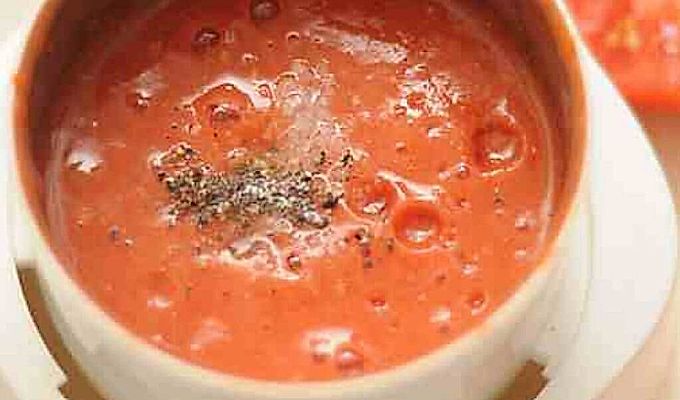 The packaged drink is obtained by direct pressing, subjecting to minimal heat treatment (pasteurization, sterilization). However, due to the short shelf life, such fresh juices are rarely found on store shelves.
In order to determine the quality of the juice, it is necessary to pay attention to the duration of its storage and the harvest season. If the nectar production date is close to the purchase period during summer-autumn time, it is most likely a natural product. The shelf life of such goods often does not exceed 2 months. If the drink label indicates winter or spring seasons, the juice is likely reconstituted from tomato concentrate. In addition, with long shelf life, it is better to refuse to buy nectar (since there are a lot of preservatives) [6]
Chemical composition
In terms of provitamin A concentration, tomato juice competes with carrot nectar, and in terms of saturation with ascorbic acid it is even ahead of citrus fruits. At the same time, the ratio of BJU (%) in fruits is 16: 2: 81.
| Name | Substance concentration in 100 g of drink, g |
|---|---|
| Water | 94.24 |
| Carbohydrates | 3.53 |
| Sugar | 2.58 |
| Alimentary fiber | 0,4 |
| Squirrels | 0.85 |
| Fats | 0.29 |
| Name | Substance content in 100 g of drink, mg |
|---|---|
| Vitamins | |
| Ascorbic acid (C) | 70.1 |
| Choline (B4) | 6.8 |
| Niacin (B3) | 0.673 |
| Alpha-tocopherol (E) | 0.32 |
| Pyridoxine (B6) | 0.07 |
| Thiamin (B1) | 0.01 |
| Riboflavin (B2) | 0.078 |
| Phylloquinone (K) | 0.0023 |
| Macronutrients | |
| Potassium | 217 |
| Sodium | 253 |
| Phosphorus | nineteen |
| Magnesium | eleven |
| Calcium | 10 |
| Trace elements | |
| Iron | 0.39 |
| Copper | 0.42 |
| Zinc | 0.11 |
| Selenium | 0.0005 |
 A distinctive feature of tomato juice is its low calorie content. 100 ml of the drink contains no more than 17 kcal, which allows it to be used in the diet of overweight people [7]
Beneficial features
Tomato juice is a natural "regulator" of glucose in diabetes mellitus. In addition, the drink accelerates the transformation of fat into energy, helps with constipation, hypertension and sleep problems. However, you should not abuse it, since an overdose can cause the following side reactions from the body: gastritis, kidney stones, heartburn, diarrhea, pain in the liver, and bouts of nausea.
Diabetics, depending on the age and severity of the course of the disease, it is permissible to drink no more than 200 ml of nectar per day [8]
The benefits of tomato juice (if drunk regularly):
However, despite the advantages, it is advisable to limit the intake of tomato juice in case of gastritis, cholecystitis, hepatitis, increased hemoglobin, pancreatitis, gout, cirrhosis of the liver and stomach ulcers.
 Other contraindications:
- allergy to plant pigments (in particular beta-carotene and lycopene);
- poisoning accompanied by vomiting;
- children's age (from 0 to 1 year old);
- hemophilia;
- tendency to stone formation in the kidneys;
- gastroesophageal reflux;
- increased secretion of gastric juice;
- when breastfeeding if the baby has a rash [10]
In addition, tomato juice is drunk with caution in case of increased acidity of gastric secretions. In this case, it is better to replace the raw product with a thermally processed drink brewed in a multicooker or juice cooker. Moreover, in order not to provoke gastritis or ulcers, it is advisable to use it one hour after eating.
Remember, drinking a tomato on an empty stomach, as well as drinking it with food, is permissible only with normal or low acidity of gastric secretions. Otherwise, irritation of the stomach lining may result.
The principle of creation at home
Considering that the preparation of tomato juice is not a complex high-tech process, you can easily create a drink with your own hands. In order to get a liter of healthy nectar, you need overripe fleshy tomatoes (1.5 kg), sugar (15 g) and salt (3 g). In this case, the amount of fresh tomatoes directly depends on the required volume of the drink. It is advisable to select them yourself, focusing on the color and taste of the product. As a device for processing fruits, both a juicer and a meat grinder with a fine nozzle are suitable.
Let's prepare homemade nectar for the winter (step by step):
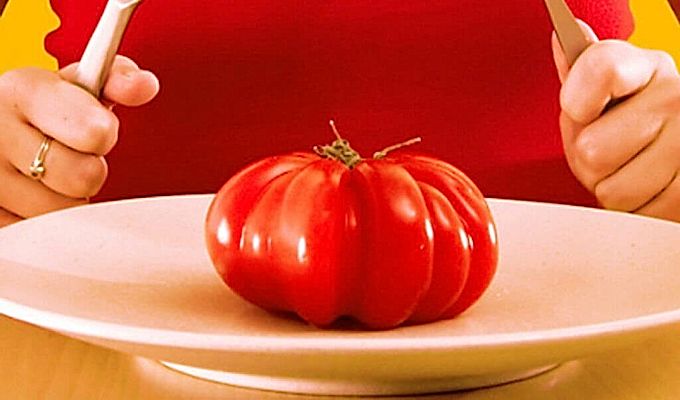 Cool the workpieces under a thick blanket, after turning it upside down. If traces of liquid are visible on the floor, the cover should be replaced. After complete cooling, the canned tomato is removed to a cool place: cellar, insulated balcony or basement.
Tomato-based diets
Considering that only 17 calories are concentrated in 100 ml of tomato juice, it is used in diet programs aimed at combating excess weight. This tasty drink is suitable for both fasting days and strict weight loss regimens.
Tomato nectar not only helps to cleanse the body of toxins, but also stimulates the involvement of fats in active metabolism, as a result of which lipids are utilized into energy. However, to obtain a pronounced therapeutic effect, it is better to use freshly squeezed juice (fresh) rather than store-bought juice. At the same time, for self-pressing, you should choose ripe fruits, since unripe tomatoes contain the toxic substance solanine. In addition, in order to avoid fluid retention in the body, it is advisable to drink juice in its natural form without salt, sugar and spices [11]
Remember, drinks in bags and cans are prepared from a reconstituted concentrate with the addition of preservatives and flavors. Such a product is of no value to the human body.
Fasting day menu on tomato nectar (one-day diet):
- breakfast: 200 ml freshly squeezed tomato juice, 20 g whole grain toast;
- lunch: 200 ml of tomato nectar;
- lunch: 230 ml of fresh tomato juice (seasoned with red pepper), 100 g of brown rice.
- Afternoon snack: 250 ml tomato and applesauce;
- dinner: 200 ml of tomato juice, 10 ml of flaxseed oil.
This nutritional scheme will help unload the body after drinking alcohol and a lush feast, as well as refresh the tone of the face before going out. For better absorption of the drink, you need to "chew" a little before swallowing it.
For a minimum weight correction (minus 1-2 kg), you can use the current express method, calculated for 3 days.
Three-day unloading on tomato juice
 First day (menu):
- breakfast: 230 ml of tomato juice, 30 g of dried rye bread, 20 g of hard cheese;
- lunch: 200 g of tomato nectar, 100 g of boiled unpolished rice, 70 g of baked apples;
- dinner: 250 ml of tomato juice, 100 g of boiled chicken (homemade), 50 g of boiled rice;
- at night: 150 g tomato.
Second day diet:
- in the morning: 230 ml of tomato juice, 150 g of salad from any fruit (except bananas, grapes, raisins);
- lunch: 200 ml of fresh tomato, 100 g of boiled fish (preferably sea fish), 50 g of tomato and cucumber salad, 5 ml of lemon juice;
- dinner: 200 tomato nectar with pulp, 50 g of boiled rice;
- in the evening before going to bed: 150 ml fresh tomato.
The third day (diet):
- breakfast: 230 ml of tomato juice, 50 g of oatmeal;
- lunch: 200 ml of tomato juice, 70 g of boiled veal, 10 g of basil greens;
- dinner: 250 ml of tomato nectar, 50 g of lettuce (seasoned with vegetable oil).
The results of the diet will be more noticeable if you carry out unloading at least 2 times a month. At the same time, you should not consume alcohol, white bread, starch, sugar and harmful sweets. If the diet is poorly tolerated and the usual food is dreamed of, the diet should be supplemented with vegetable products (carrots, cucumbers, zucchini, bell peppers) and herbs.
To consolidate the result obtained, a glass of tomato juice is left in the daily menu. If desired, the drink can be enriched with garlic, green onions, parsley or dill (after beating in a blender).
Remember, when losing weight, it is important to drink at least 2.5 liters of filtered water per day (maximum 4 liters).
The tomato diet is great for unloading the body during Lent.
How to use it correctly
Tomato juice is a storehouse of nutrients. However, in order to get the most out of a product, it is important to know how to cook and drink it properly.
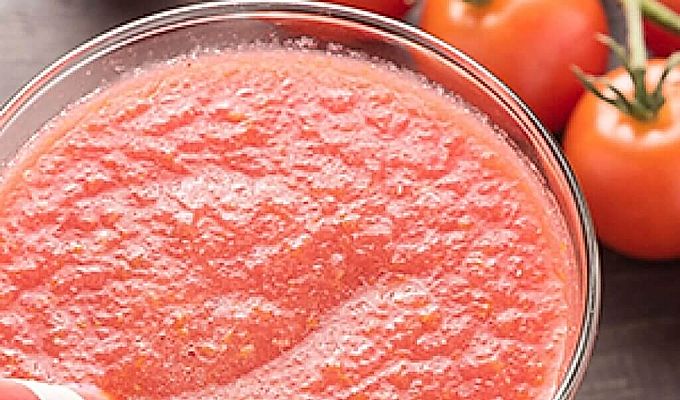 Subtleties of consuming a vegetable drink:
In addition, moonshine and vodka diluted with tomato juice do less harm to the body than hard alcohol.
Tomato juice in questions and answers
At what age can a product be introduced into a child's diet
 It is strictly forbidden to give fresh tomato nectar to a baby for up to a year (due to the aggressive effect of organic acids on the baby's stomach). After a year and a half, the drink can be introduced into the children's diet in small doses (no more than 30 ml at a time). At the same time, it is important to monitor the child's reaction. When the first symptoms of allergy appear (rash, colic, swelling, vomiting, diarrhea), the drink is canceled. If the stool does not harden and there was no negative reaction, it is permissible to increase the portion of nectar to 100 ml per day [12]
Which packaged juice is better to give preference
When choosing store-bought nectar, it is recommended to pay attention to the "thick" drink in a glass container. Quality samples should be labeled with pulp juice. This marking means that the volume fraction of the drink accounts for at least 8% of the fiber mass (TR CU 023/2011 and GOST R53137-2008).
The best tomato juice producers: Santal, J7, Sandora, Rich (rating of the independent expertise of the Consumer Union Roskontrol + consumer reviews).
Is it possible to make juice from tomato paste
Yes. However, there are few useful substances in such a drink, since tomato paste is subjected to thermal processing, which destroys nutrients.
Can tomato juice provoke an exacerbation of urolithiasis
If you drink high-quality nectar in reasonable doses (up to 150 ml at a time), the pathology will not worsen. The main thing is to consume it separately from proteins and starches. In addition, tomato juice has diuretic and choleretic effects on the body.
Is it acceptable to drink juice while breastfeeding (HS), if you drank it before
Depending on the individual characteristics of the child. It is useful for women on HBV to drink tomato juice, provided there is no gas formation and colic in children. The product is introduced into the menu gradually, starting with small portions (15 ml) and pre-diluting with boiled water.
 For a nursing woman, the optimal mode of juice consumption is 2 times a day (in the morning and in the evening after the baby is satiated). If the baby has no allergies, the portion of the drink can be increased to 150 ml.
It's true that tomato juice boosts male strength
Yes. Tomato juice is very useful for men, as it improves the quality of sperm, increases sexual stamina, and stimulates testosterone synthesis. In addition, the drink is effective for prostatitis, low potency and inflammation of the testicles (due to the high concentration of lycopene) [3]
How to remove tomato juice stains
To remove fresh dirt, you can use table vinegar: dilute the essence with cool water (in a 1: 2 ratio) and apply to the contaminated area. After 5 minutes, rinse the fabric thoroughly with hot, soapy liquid. In an emergency (on an airplane or train), the stain should be quickly filled with salt (for 20 minutes), and then rinsed under running water.
Conclusion
Tomato juice is a healthy nutritious drink, a glass of which contains 0.25 g of fat, 1.5 g of protein and 9.5 g of carbohydrates. In addition, it contains vitamins, minerals, plant pigments and organic acids. The beneficial properties of nectar are obvious: it thins the blood, strengthens the capillary wall, stabilizes the heart rate, weakens the intestines, helps with "bad" sleep, normalizes blood pressure, increases potency.
Nutritious nectar is used for the following diseases: prostatitis, gastritis with low acidity, constipation, obesity, glaucoma, hypertension, anemia, angina pectoris. In addition, due to the high content of lycopene, tomato juice has a pronounced antioxidant and antitumor effect on the body. Moreover, for the prevention of cancer, only 200 ml of fluid a day is enough.
According to the rating of independent experts, the best brands (producers) of tomato juice are “Rich”, “Santal”, “J7”, “Sandora”.
- Coronaviruses: SARS-CoV-2 (COVID-19)
- Antibiotics for the prevention and treatment of COVID-19: how effective are
- The most common "office" diseases
- Does vodka kill coronavirus
- How to stay alive on our roads?
To obtain a therapeutic effect, it is recommended to use home-squeezed nectar (and not purchased or canned food). To cook it at home, you need to take a simple inventory: a meat grinder, juicer or fine sieve. The freshly squeezed beverage should be consumed immediately after grinding. Only in this case it provides the maximum value for the human body.
If fresh nectar remains, it can be frozen or preserved. In addition, you can marinate kebabs in it. Along with this, homemade sauce and ketchup are made on the basis of juice, recipes for which are presented on the network.
Remember, for problems with the digestive tract, allergies, hyperacid gastritis or hemophilia, it is better to boil tomato juice or steam it. In this case, the consumption of nectar is transferred to the afternoon hours (60 minutes after eating).
In addition, if a woman is pregnant or breastfeeding, it is advisable to discuss tomato juice treatment with a gynecologist.
Things to know (Q&A)
Is fresh tomato juice good for you?
Tomato juice is rich in nutrients like vitamin C, B vitamins, and potassium. It's also an excellent source of antioxidants , such as lycopene, which may reduce inflammation and your risk of heart disease and some cancers. Be sure to buy 100% tomato juice without added salt or sugar — or make your own at hom
Can I drink tomato juice everyday?
A new research has found that drinking unsalted tomato juice can lower blood pressure and cholesterol level in adults who are at risk of cardiovascular disease. … You should definitely make tomatoes and tomato juice a part of your daily die
How much tomato juice should I drink a day?
How much tomato juice is healthy for you to consume in a single day? Deshpande recommends consuming at least two glasses of tomato juice in a day to help you lose weight and burn belly fat fas
What are the benefits of drinking tomato juice everyday?
Health Benefits Of Tomato Juice
- Super Antioxidant Properties. One of the biggest selling features of tomato juice is its antioxidant properties. …
- Helps Regularise Digestion. …
- Helps Prevent Blood Clotting. …
- Heart-Friendly. …
- A Great Detoxifying Agent. …
- Lowers Cholesterol. …
- Boosts Eye-Health. …
- Makes For A Great Workout Recovery.
Is it okay to drink tomato juice everyday?
A new research has found that drinking unsalted tomato juice can lower blood pressure and cholesterol level in adults who are at risk of cardiovascular disease. … You should definitely make tomatoes and tomato juice a part of your daily diet
Can you drink fresh tomato juice?
This is due to the lack of pasteurization of the juice when using raw tomatoes — in fact, this is one reason that several tomato juice recipes contain a cooking element where the tomatoes are simmered before straining for juice. However, you can enjoy the juice raw, too — just give it a good shake before drinking
What does fresh tomato do to the body?
Tomatoes are the major dietary source of the antioxidant lycopene , which has been linked to many health benefits, including reduced risk of heart disease and cancer. They are also a great source of vitamin C, potassium, folate, and vitamin
When is the best time to drink tomato juice?
the morning
However, consuming the juice without straining it can help preserve its fiber content." She recommends that the best time to consume tomato juice is in the morning on an empty stomach . Not only will this help your body combat acidity but will also activate organs by supplying easily available nutrient
Is it good to drink tomato juice everyday?
Consuming tomato juice regularly may help stimulate the bowel movement , further preventing constipation and boosting digestion. Tomato juice is rich in fibre and functions as a mild laxative that can help prevent constipation. Consumption of this juice can keep constipation at bay.
What happens when you drink tomato juice everyday?
Tomato juice is rich in nutrients like vitamin C , B vitamins, and potassium. It's also an excellent source of antioxidants, such as lycopene, which may reduce inflammation and your risk of heart disease and some cancers.
How much tomato juice should you drink a day?
How much tomato juice is healthy for you to consume in a single day? Deshpande recommends consuming at least two glasses of tomato juice in a day to help you lose weight and burn belly fat fast.
Is it bad to drink a lot of tomato juice?
02/10Acid indigestion or acid reflux
Loaded with acidic contents like malic and citric acid, tomatoes can cause a serious acid reflux in your system after indulging in them too much. Once the process of digestion begins, the acidic contents of the tomatoes lead to the release of excess gastric acid in stomach.
Can I drink too much tomato juice?
02/10Acid indigestion or acid reflux
Loaded with acidic contents like malic and citric acid, tomatoes can cause a serious acid reflux in your system after indulging in them too much. Once the process of digestion begins, the acidic contents of the tomatoes lead to the release of excess gastric acid in stomac
What is the side effect of tomato juice?
The compound called histamine in tomatoes may lead to skin rashes or allergic reactions. Hence, if you are allergic to tomatoes, then you may experience swelling of mouth, tongue and face, sneezing and throat infection among others. Meanwhile tomatoes can also cause allergic contact dermatiti