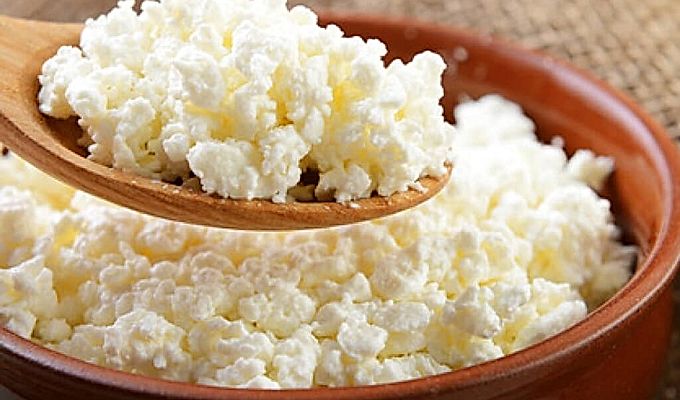
 Cottage cheese is a fermented milk product consisting of easily digestible calcium and growth amino acids. It is extremely important for children and the elderly, for people with tuberculosis, diseases of the bones, stomach, liver, kidneys [1]
How did the cottage cheese appear?
According to ancient records, mankind has been making cottage cheese for over 4,000 years. Today it is impossible to say with certainty who made the first cheese and when. Most likely, this product was "born" by accident. In principle, the ancient Eastern legend also speaks about it. According to legend, an Arabian merchant, setting out on a journey through the desert, took with him a supply of milk. He kept the milk drink in a bag made from the stomach of a sheep. The rennet from the walls of the bag and the scorching sun did their job - the milk separated into whey and a thick sediment. In the evening, the Arabian discovered that the resulting whey was excellent at quenching his thirst, and that the white thick substance with a delicious aroma was suitable as a nutritious product. The merchant did the next portion of cottage cheese consciously. Further, the legend says that travelers from Asia passed on the art of cheese making to Europeans. And since then humanity has begun mass produce cottage cheese and other types of cheese [1]
- How did the cottage cheese appear?
- Neolithic cheese?
- Cottage cheese in ancient Russia
- Types of cottage cheese
- Role in the body
- Side effects
- Pure protein
- Curd: how to choose the right one?
- What's wrong with the curd?
- How to cook yourself
- How to store it correctly
Neolithic cheese?
But still, not so long ago, scientists made a discovery that casts doubt on the veracity of the legend. The thing is that on the territory of Poland archaeologists have discovered ceramic lattices, which are about 7500 years old. “Well, what does the cottage cheese have to do with it?” You ask. And despite the fact that researchers from the University of Bristol found a large amount of milk fat residues on this ancient find. This led scientists to believe that ceramics were used by ancient people for the preparation or storage of dairy food. After a more detailed study of the find, the researchers suggested that these very grates were once used to separate the curd from the whey.
According to archaeologists, cottage cheese was an extremely important product for the Neolithic people. Considering that almost the entire adult population in those days suffered from lactose intolerance, then the ancients could use the fermented product without problems, saturating the body with nutritious components from milk.
Presumably, in ancient times, people made more liquid cottage cheese. Part of it was eaten immediately, and the remains in clay pots were buried in the ground and fed on the product in winter [2]
Cottage cheese in ancient Russia
 It is known that cottage cheese was also cooked in Ancient Rome, India and Russia. In Rome, this type of cheese was revered by both the poor and the rich. In ancient times, people consumed this product with milk, honey and wine. But the Hindus believed that cottage cheese is the favorite food of God Krishna, which gives strength and heals diseases. Therefore, it is not strange that this lactic acid product was part of many ancient rituals in India.
The Rusichi made cottage cheese from yogurt. The pots with the drink were kept in the oven for several hours, then the contents were poured into cone-shaped linen bags and pressed down with a press. If our ancestors wanted to extend the life of the product, then several more times they put the strained cottage cheese in a pot and sent it to the oven. The procedure was repeated until the cheese (which is what cottage cheese was called in Russia) completely dried out. Then it was poured over with ghee and placed in an earthenware cellar. So the cottage cheese could be stored for several months. By the way, in those days the more expensive cheese was more expensive [1] [2]
Types of cottage cheese
Depending on the manufacturing method, it can be of several types:
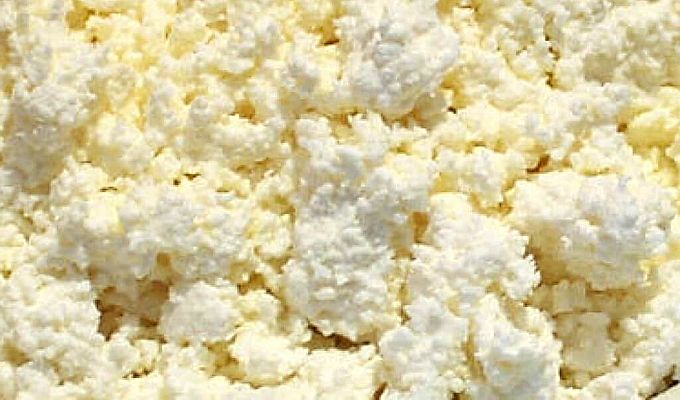 Acid-rennet. For production, pasteurized milk, lactic acid, rennet are used. By the way, this is exactly the substance that is contained in the stomachs of animals and which, according to legend, transformed the milk of an oriental traveler into whey and white lumps. Rennet speeds up the process of making cottage cheese, without pre-souring.
 By fat content, cottage cheese is:
- bold: 19 to 23%;
- bold (classic): 4 to 18%;
- low-fat: 2 to 3.8%;
- fat-free: less than 1.8% [1]
Role in the body
Many of us understand that cottage cheese is a good health product. But what exactly happens after it enters the human body? What role does it take on? Now let's try to figure it out.
Digestion
One of the main benefits of cottage cheese is its benefits for digestion.
Several studies have shown that it is able to treat stomach infections. In addition, it is important to remember that all lactic acid products have a beneficial effect on the intestinal microflora, on which, without exaggeration, the state of the whole organism depends [3] [4] [5] [6]
Immunity
A healthy microflora in the intestines is a guarantee of strong immunity. Curd is one of the best sources of probiotics. Daily consumption of this product helps the body fight harmful fungi, including the genus Candida, strengthens the immune system and restores healthy microflora [3] [4] [5] [6]
 Bones and teeth
Like other dairy products, curd contains calcium, which plays a key role in strengthening bone and tooth enamel. Phosphorus is also an essential ingredient in cheese. In combination with calcium, it promotes proper bone growth, which is especially important for children and adults after fractures. Regular consumption of this product prevents arthritis and osteoporosis [3] [4] [5] [6]
Dandruff
Have you tried every known method to get rid of dandruff? It's time to taste the curd. Dandruff is a fungal infection and fermented milk has antifungal properties. Do you want to speed up your treatment? Then, in addition to consumption, fermented milk cheese can be used as a mask for the scalp. Usually 1-2 procedures are enough to get rid of the problem.
Stress and anxiety
Disorders of the nervous system are already a common part of the life of a modern person. But depressions and stress have an extremely negative effect on the functioning of the whole organism. And here also cottage cheese comes to the rescue. The whole secret is that the composition of the product contains substances that affect the areas of the brain that are responsible for emotional stress.
Excess weight
As already noted, cottage cheese contains significant reserves of calcium. And he, in turn, is extremely important for the production of the hormone cortisol in the body, the lack of which leads to obesity and hypertension. Do you want to lose weight? To do this, it is enough to eat about 500 g of cottage cheese daily. For this purpose, there is a special curd diet, the effectiveness of which has been tested by many losing weight.
Vessels and heart
The presence of cottage cheese in the daily diet reduces the risk of coronary heart disease, regulates cholesterol and strengthens blood vessels.
Leather
Cottage cheese can replace a whole arsenal of cosmetics for the skin. To improve the color and texture of the epidermis, it is important to eat at least a small portion of fermented milk cheese every day. It is a source of vitamin E, zinc, phosphorus and other substances important for the skin.
You can also apply a curd face mask. By mixing a little cottage cheese, flour and lemon juice, your skin can return to its radiance and softness in just 15 minutes.
Milk substitute
One of the important advantages of cottage cheese is that people who are intolerant of milk can consume cheese without side effects and receive the beneficial components contained in dairy products.
Reproductive system
Several studies have shown that regular consumption of curd products affects the health of the reproductive system. Also, this product has aphrodisiac properties, enhances libido and potency in men.
 Benefits of cottage cheese:
- regulates blood pressure;
- lowers cholesterol levels;
- useful for fungal infections;
- effective for intestinal disorders;
- an important source of calcium;
- strengthens bones and tooth enamel;
- protects against cardiac disorders;
- reduces the risk of developing cancer.
As well as:
- stimulates the immune system;
- relieves stress and anxiety;
- improves digestion;
- relieves hangover syndrome;
- provides energy;
- stimulates the brain and its functions.
Benefits for the skin:
- promotes exfoliation of dead cells of the epidermis;
- gives freshness and radiance;
- makes the skin smooth;
- natural skin softener.
Benefits for hair:
- excellent remedy for dry and damaged hair;
- has the properties of an air conditioner;
- stimulates hair growth.
Side effects
Side effects are very rare, even in people with lactose intolerance. But still, organisms that are extremely sensitive to lactic components can react to this product with abdominal pain, constipation, diarrhea, and bloating. Allergic reactions are also possible in the form of skin rashes, shortness of breath, swelling and itching.
Pure protein
Looking for a product that provides the highest possible amount of protein? Consider that you have already found it. To prepare a dish rich in proteins, or, more precisely, protein is almost in "pure form", you will need cod (fillet), low-fat cottage cheese, raw chicken egg white and a little onion. Pass all ingredients through a meat grinder, stir, form meatballs or bake a casserole.
This dish is ideal for bodybuilders and those on a protein diet.
| Calorie content | 156 kcal |
| Squirrels | 17 g |
| Fats | 9 g |
| Carbohydrates | 2.1 g |
| Vitamin A | 0.09 mg |
| Vitamin B1 | 0.05 mg |
| Vitamin B2 | 0.31 mg |
| Vitamin C | 0.45 mg |
| Vitamin PP | 0.41 mg |
| Iron | 0.42 mg |
| Calcium | 165 mg |
| Magnesium | 23.1 mg |
| Phosphorus | 218 mg |
| Potassium | 115 mg |
| Sodium | 42 mg |
Curd: how to choose the right one?
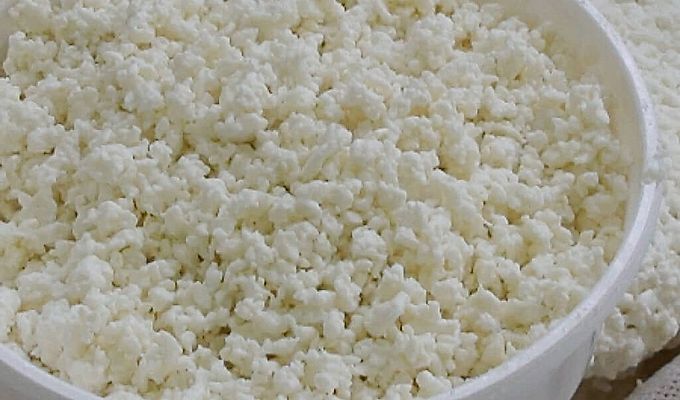 When choosing cottage cheese, it is important to pay attention to:
- consistency;
- color;
- smell;
- taste;
- fat content;
- preparation method.
Fresh product, as a rule, crumbly, soft, smear, with a fresh smell and natural fermented milk taste. Low-fat varieties contain a small amount of whey. Correctly cooked curd is usually white with a creamy shade.
By the way, the product made by the acid-rennet method (grained) takes a little longer to digest than other types of cottage cheese. This is due to the increased viscosity of the cheese.
What's wrong with the curd?
Sometimes you can find that the seemingly fresh cottage cheese has an uncharacteristic taste or smell. These tips will help you understand what is wrong with the product.
It says that putrefactive bacteria appeared in the product as a result of improper storage of cheese, non-observance of technology during production or the use of poor leaven.
This uncharacteristic aftertaste and smell for curd is caused by acetic bacteria. Appears when the product is kept warm.
Harmful bacteria and mold can appear in oily curds, causing a bitter taste. The reason is non-compliance with production techniques. More precisely, during pasteurization, the milk was not warmed up enough.
Excessive pressing of the product, improper (insufficient, untimely) cooling, the presence of antibiotics in milk or "chemistry" in the finished cottage cheese declare themselves to have an excessively sour taste.
Yeast fungi can get into the composition of cottage cheese from kefir or sourdough for it. As a result (especially if the cottage cheese is kept warm), the fungus begins to actively grow and declare itself with a characteristic aftertaste.
 Tasteless.
 The insipid product, devoid of a characteristic curd taste, indicates that a weakly active sourdough was used for its production.
The reason is insufficient expression and squeezing out of the curd mass.
This effect can occur for two reasons. If too much rennet was used in the manufacture of the product or the milk was fermented at too high a temperature.
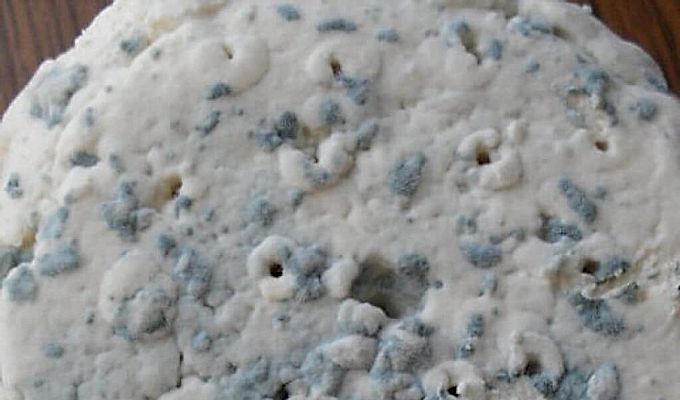
It must be said right away that such a defect is dangerous to health. Appears if the product has been stored in a damp place and not in compliance with the standards.
How to cook yourself
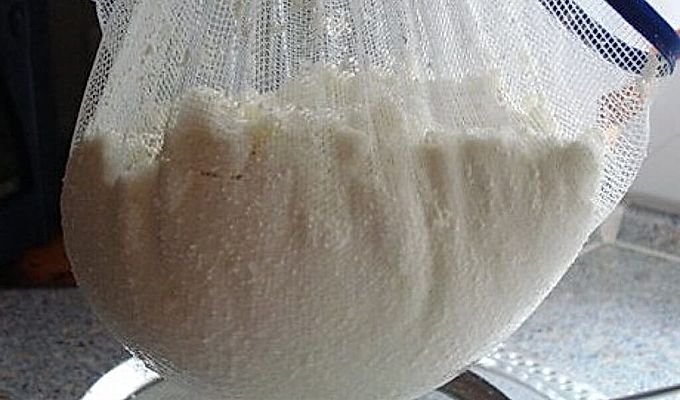 A variation of supermarket cottage cheese is a homemade cheese that can always be bought on the market. But it is this version of the product, as nutritionists say, can be fraught with the most dangers if it is made from low-quality milk.
For more confidence in the freshness and quality of the product, you can try making cottage cheese yourself. Moreover, there is nothing complicated in this recipe.
To make homemade cheese, you will need yogurt, which must be placed in a water bath for a while. When a protein lump forms in the liquid, drain the whey and place the cheese lump in a gauze or cloth bag. Press down with a weight. When the excess liquid is gone, the curd is ready to eat. Such a product will undoubtedly appeal to both adults and children. But, most importantly, now you are confident in the quality and freshness of your cheese.
The finished product can be eaten without additives, with vegetables, fruits, sour cream or yogurt, added to salads, prepared cheesecakes (curds), pies and pies, cookies, cheesecakes and desserts from it. In short, everything that fantasy allows [7]
How to store it correctly
Curd is not intended for long-term storage. The manufacturer indicates the safe terms on the packaging. Thermally processed cottage cheese retains its freshness for the longest time (up to 2 weeks). The product with stabilizers will "last" up to a week. And no longer than 36 hours, 18 percent and low-fat varieties, as well as curd products, live.
You can extend the life of cottage cheese to several months if you freeze it. It is important to maintain a stable temperature in the freezer. Any hesitation will make the cheese dry and with ice chunks. You can return the tenderness to defrosted cottage cheese if you mix it with 50% cream or pour milk in a one-to-one ratio for 2 hours.
Curd is a unique product. It tastes equally salty and sweet. It is a nutritious food that can help you lose weight. And most interestingly, being a dairy product, it is suitable for people with lactose intolerance. Scientists are still arguing about the age of cottage cheese, and the best chefs in the world compete in the ability to cook delicious dishes from fermented milk cheese - an almost ideal product in terms of its properties [7]
Things to know (Q&A)
Why cottage cheese is bad for you?
Because cottage cheese is a fresh, unripened cheese, it contains more lactose than aged cheeses like Parmesan, Cheddar, or Swiss. Moreover, cottage cheese may contain even more lactose if additional milk is added to the curd. For these reasons, cottage cheese is not a good choice if you're lactose intolerant.
Which is healthier yogurt or cottage cheese?
Lower in Calories: Greek yogurt contains fewer calories-120 per cup, vs. 160 for cottage cheese. It's also more likely to contain probiotics (live active cultures of gut-friendly bacteria
What is cottage cheese made of?
Cottage cheese is made by acidifying milk , which results in the curds separating from the whey. After the curds are formed, they're rinsed and some salt may be adde
What is the healthiest cottage cheese to eat?
Nutrition info refers to ½ cup.
- Good Culture Low-Fat Classic Organic Cottage Cheese. …
- Daisy Low Fat Cottage Cheese. …
- Clover Sonoma Organic Low Fat Cottage Cheese. …
- Sunnyside Farms Lowfat Cottage Cheese. …
- 365 Organic Cottage Cheese. …
- Bayview Low-fat Cottage Cheese. …
- Lucerne Lowfat Cottage Cheese. …
- Knudsen Lowfat Cottage Cheese.
Is it OK to eat cottage cheese every day?
Is It OK to Eat Cottage Cheese Every Day? Yes, cottage cheese can be part of a healthy diet every day . If you're sensitive to dairy, look for a lactose-free option like Green Valley Creamery. The versatility of cottage cheese recipes makes it easy to incorporate this protein-packed treat into any meal.
Is cottage cheese an inflammatory food?
Butter, whole milk, and cheese:Again, the problem is saturated fat. Instead, eat low-fat dairy products. They aren't considered inflammatory . French fries, fried chicken, and other fried foods:Cooking them in vegetable oil doesn't make them health
Does cottage cheese make you fat?
One of the best ones is cottage cheese — calorie for calorie, it is mostly just protein with very little carbohydrates and fat . Eating plenty of cottage cheese is a great way to boost your protein intake. It is also very satiating, making you feel full with a relatively low number of calorie
What's better for you cottage cheese or yogurt?
Calories and Protein
Yogurt's the winner, just barely, if you're watching your weight. One cup of plain low-fat yogurt, regular or Greek-style, averages 154 calories, compared with 182 calories for low-fat cottage cheese. Cottage cheese is higher in protein—27 grams per cup versus 12 grams for plain yogur
Which has more carbs cottage cheese or Greek yogurt?
Both greek yogurt and cottage cheese are low in carbohydrates - greek yogurt has 3.9g of total carbs per 100 grams and cottage cheese has 3.4g of carbohydrates.
Can I eat cottage cheese instead of yogurt?
"People tend to go for Greek yogurt for this, but because cottage cheese is actually a bit higher in protein, it's a really good choice," she says. And of course both can be eaten as is, or with fruit, honey, and granol
Is cottage cheese healthy to eat?
It's high in many nutrients, including protein, B vitamins, and minerals like calcium, selenium, and phosphorus. If you're looking to lose weight or build muscle, cottage cheese is among the most beneficial foods you can eat.
Why you shouldn't eat cottage cheese?
The side effects may be temporary, but if you frequently go on the cottage cheese diet and consistently consume too much sodium, serious problems may occur, such as: high blood pressure . increased risk of heart attack and stroke . heart failure .
Is cottage cheese a real cheese?
Cottage cheese is a fresh cheese ; it's not aged or ripened the way hard cheeses like cheddar or Parmesan are. To make it, an acid or acid-producing culture is added to milk (usually nonfat), which begins the process of separating the liquid whey protein from the milk solids, or curds.
Is cottage cheese healthier than yogurt?
A closer look at both these health trends revealed some surprising results: A 100-gram serving of full-fat cottage cheese contains 11.5 grams of protein and 4.3 grams of fat. The same amount of full-fat Greek yogurt has about 8.7 grams of protein and nearly as much fat (4.1 grams).