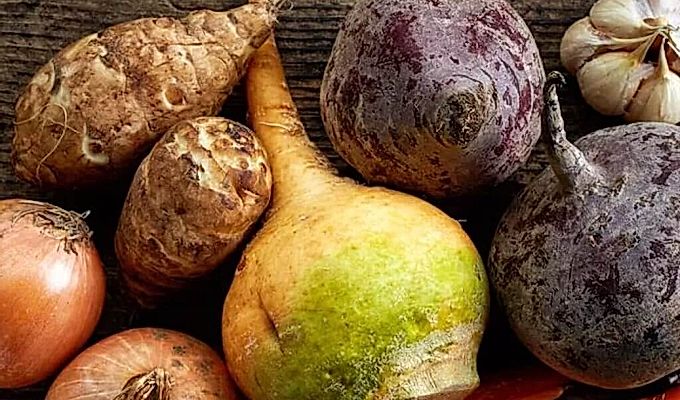
 Root vegetables are valuable sources of nutrients. Even in ancient times, people used them to replenish the reserves of vitamins and minerals in the body.
Since then, mankind has developed many of their hybrids, which, with varying degrees of popularity, are in demand among ordinary people from different countries. Most people value these roots due to the sick amount of starch. Through many years of observation, people have noticed that edible root parts that were harvested in spring and autumn are able to demonstrate the highest starch content. In some cases, at the onset of spring, the rhizome will be distilled into sugar, which is also highly valued among lovers of delicious lunch.
The modified root sometimes reaches a truly record size of about a meter in length. But there are also species that reach only a few centimeters according to a given parameter. Usually, they are shaped like the outline of a bulb, but exceptions are possible, such as elongated silhouettes, slightly flattened or completely round.
- Schematic classification
- Composition secrets
- Edible root vegetables
In addition to being the staple food of vegetarians, such patrons of the garden often serve as the basis for the preparation of various medicines. Moreover, it is far from necessary that these were recipes from traditional medicine, since some of their features can be used for herbal medicine.
But if you want to taste unknown species, it is imperative to study the detailed information about the specimen you like. The increased caution is explained by the fact that exotic roots sometimes contain poison.
Schematic classification
Another interesting story is the research of archaeologists. They concluded that the roots of beets were originally elongated. She resembled the outline of a carrot. Over time, the shape has changed, and it received its modern shape only in the sixteenth century.
All available root crops schematically form four main families:
- cabbage;
- astrovoe;
- Maryevaya;
- umbrella.
The first category covers vegetables traditional for many Slavic peoples. In addition to radish, the list includes radish, horseradish, rutabaga. Also included are turnips, turnips.
Among the astral representatives, chicory and scorzonera are distinguished. The first is often prescribed to coffee lovers who, due to irritable bowel syndrome, are prohibited from drinking natural coffee.
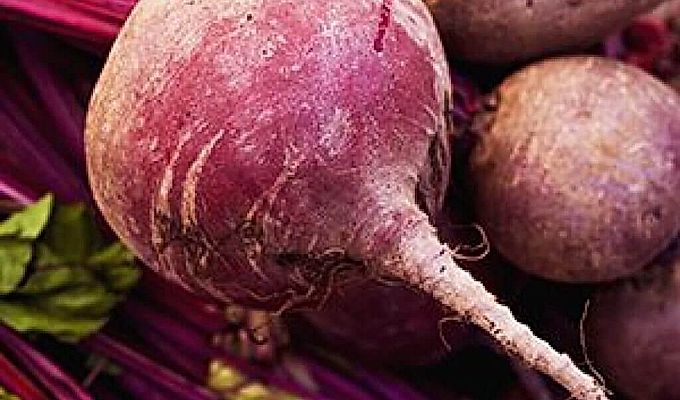 The most common member of the family is the beetroot. But the umbrella ones are richer in representatives:
- carrot;
- parsley ;
- parsnip;
- celery .
Separately, the entire list will be divided according to the age of "life" of each vegetable. Most of the roots that have undergone a modification are considered two years old. But annual specimens like radishes or perennials, represented by katran and horseradish, are much less common.
Composition secrets
It is difficult to overestimate the role of root crops in the life of every consumer. They are highly regarded not only by vegans, but also by those who prioritize healthy eating habits. There are individual forage varieties that are grown to be fed to farm animals. For their processing for livestock, only the simplest feed cutter is required, because the products are given raw. Passing through the chopper does not deprive them of their original nutritional value.
But the biologically active composition of each vegetable is capable of varying from the species and other characteristics of the variety. An equally important role here is played by the growing area and the technological approach to plant care before harvesting.
The average statistical components for root crops that have not been affected by heat treatment include:
- about 90% water;
- amino acids;
- proteins;
- sugar-containing compounds;
- Omega-3;
- glycosides;
- phenolic substances;
- pectins;
- fiber;
- vitamins of group A, E, C, B, PP;
- minerals like potassium, sulfur, iron, silicon, phosphorus, cobalt, copper, boron.
Collectively, this has made the underground parts truly rewarding for both adults and children. Their distinctive feature is their low glycemic index. In practice, this means that the selected tuber will block the sharp rise in blood sugar, which will be a useful find for those prone to diabetes.
Due to the small amount of calories on the background of food of animal origin, vegetables of this type will become indispensable in the life of those who strictly follow the figure. It is not for nothing that most dietary schemes are based precisely on the fruit and vegetable base.
Adding advantages is the fact that their storage does not require special conditions. It is enough just to move the stocks to a dark place that is well ventilated and there is a low temperature. Basements and cellars are ideal solutions for this.
Often examples of various tinctures and decoctions for ailments of any organ affect the need to use just root vegetables. Moreover, they are boiled, ground, squeezed out and used in some other way, not only for internal consumption. Some recipes call for topical use when it is necessary to get rid of extensive burns or open wounds. Thanks for this should be antiseptic qualities, which have a beneficial effect on the regeneration functions of the affected organism.
But along with the great benefits, you should remember about the possible harm. Often it concerns the unscrupulous care of the future crop, when unclean gardeners add various chemicals to accelerate growth. Some, to achieve a good effect in a short time, even exceed the permissible dosage.
But even without this, ordinary carrots are able to "please" with the presence of arsenic and strontium. Because of this, the orange root crop should be bought only in trusted places so as not to purchase goods from an unfavorable ecological zone.
Edible root vegetables
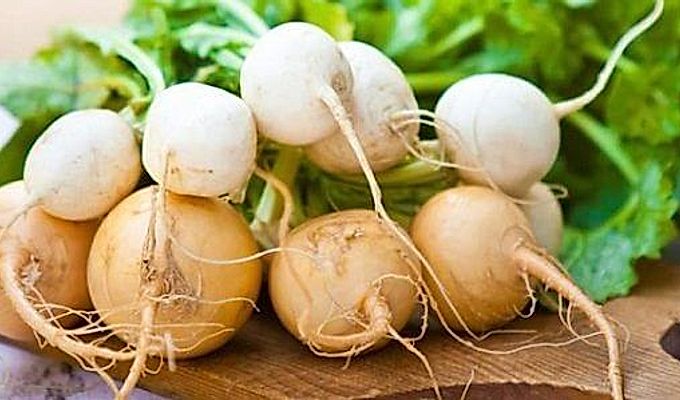 The unusual structure of plants has long ceased to surprise people. Now they are mostly interested in which specimen to choose and whether it is edible.
Among those vegetables that are most often present in the composition of various dishes, the highest demand is for:
- beet;
- carrot;
- turnip;
- horseradish;
- wild parsnip;
- earthen pear.
Depending on the geographical location, radish, sweet potatoes, cinquefoil, earthen pear, peanut may be added to the list. In some cases, not only parts hidden in the soil are eaten, but also leaves. But herbalists often do not disdain even an escape, if he is able to boast of some medicinal qualities.
In exotic countries, its so-called sugar substitute is used - sweet potato. And although according to the botanical classification they are not at all similar, outwardly, the two root crops really have significant similarities. But the sweet potato taste is sweeter.
 Wild parsnips are usually grown specifically on the backyard. The plant itself has thorns and small hairs that interfere with harvesting. But its edible component will delight you with a wide range of vitamins, which can be obtained by eating boiled root vegetables.
An earthen pear, which many people know as Jerusalem artichoke, looks more like a sunflower. Its dimensions often reach one meter in height. But such a large stem is not of particular value, because only the underground part is used for food. At the same time, to preserve nutritional value, doctors generally advise not to peel off the skin from root crops. Instead, they are washed gently.
The American peanut looks quite exotic against the background of the familiar turnip. Enthusiasts tried to adapt it for their regions. It does do quite well in some areas, although it originally grew exclusively in the woodlands of North America.
The only caveat here is a careful approach to the choice of edible parts. These should only be small tubers that are pre-boiled or fried.
Potentilla goose can also be found far from everywhere, since it usually settles in areas with high humidity. Its roots are allowed to be eaten raw, but to enjoy the food, it is better to boil them or at least stew them.
Not all beet lovers know how useful it is. Its main advantage is its anti-aging effect. She also:
- has a shock reserve of folic acid;
- an abundance of silicon;
- has the ability to make the skin elastic.
With its regular consumption, it will turn out to improve the condition of the hair, making it stronger and at the same time shiny.
Also, adherents of traditional medicine know that its composition has a beneficial effect on intestinal tone, and also stabilizes brain activity. The latter quality will be especially liked by the fact that due to duty, he must constantly be in constant mental stress.
To get all the nutrients, and especially the reserves of folic acid, do not get too carried away with heat treatment. Prolonged exposure to temperatures practically negates all the benefits of the product. Because of this, connoisseurs prefer small tubers that boil quickly and can then be added to salad with a minimum of spices.
- Coronaviruses: SARS-CoV-2 (COVID-19)
- Antibiotics for the prevention and treatment of COVID-19: how effective are
- The most common "office" diseases
- Does vodka kill coronavirus
- How to stay alive on our roads?
Many people know about the benefits of carrots. First of all, it is able to boast of the presence of beta-carotene, which is the best friend of skin and stable vision. But even without his main weapon, the orange healer has reserves of other nutrients like selenium. It helps the immune system to cope with the responsibilities assigned to it in case of negative external factors such as bad ecology.
Some people far from botany are surprised by the fact that carrots contain phytoncides. They effectively affect pathogens, not inferior in productivity to phytoncides of onion and garlic.
Also, not all lovers of the main ingredient in the rabbit menu know that the body needs vitamin E and zinc to assimilate beta-carotene. These components should dissolve in fats, which will contribute to the speedy absorption of the beneficial component. Because of this, many carrot-based diet recipes include the addition of sunflower oil and seeds.
Particularly noteworthy is the turnip, which saved the ancient people from hunger during the cold period. This vegetable practically does not lose its nutritional value during prolonged storage. Even after a season in the basement, she will delight with a high dosage of calcium, which works to reduce the risk of fractures and caries.
It also contains vitamin C, folic acid and carotene. This magical trio will help even a weakened body successfully survive winter epidemics of viral diseases or flu outbreaks. This is explained by the fact that when the reserves of these elements are replenished, the immune system works at full strength, protecting the internal organs from possible damage from the outside.
The most important thing when eating vegetables that are hiding in the soil is knowing the measure. Consumption of vitamins in doses exceeding the recommended value is unlikely to be beneficial.
Things to know (Q&A)
Is Roots on Netflix or Amazon Prime?
Right now you can watch Roots on HBO Max . You are able to stream Roots by renting or purchasing on Vudu, Google Play, Amazon Instant Video, and iTunes.
Is Roots on Amazon Prime?
Watch Roots Season 1 | Prime Video.
Does Netflix have Roots 2021?
07.Is Roots on Netflix? No Roots is not available on Netflix .
Is Roots only in Canada?
Starting with a tiny store in Toronto, Roots now has more than 120 retail locations in Canada and the United States, and more than 40 in Asia. In addition, Roots has a state-of-the-art leather goods factory and design centre in Toronto.
What channel is Roots coming on?
About the Show. HISTORY® premieres “Roots” on Memorial Day 2016, airing over four consecutive nights at 9 p.m. beginning Monda
Where can I watch Roots movie 2016?
Discover What's Streaming On:
- Acorn TV.
- Amazon Prime Video.
- AMC+
- Apple TV+
- BritBox.
- discovery+
- Disney+
- ESPN.
Where can I watch Roots original?
Watch Roots - Stream TV Shows | HBO Max .
How many seasons of Roots are there?
Roots (2016 miniseries)
| Roots | |
|---|---|
| Country of origin | United States |
| Original language | English |
| No. of episodes | 4 |
| Production |
Does America have roots?
Roots has 120 stores in North America , including five flagship stores in Canada in Toronto (Bloor St., The Eaton Centre, and Yorkdale Shopping Centre), Vancouver (on Robson St.), and Montreal (Centreville).
How many countries does Roots operate in?
Building a Legendary Global Brand.
What started as one store in Toronto, Canada in 1973, has grown into a 2,200-plus person organization with more than 260 stores across four countries . Roots is a high-performance, omni-channel retailer with an iconic brand at our core.
When did roots go international?
Roots Taiwan magazine advertisement, 2012. Since its sale to Searchlight Capital Partners, Roots's strategy has been ardently focused on international expansion. When the company became public in 2017 , it had more stores in Asia than it did in North America: 116 in Canada, 4 in the United States and 136 in Asi
Did roots start in Canada?
Roots was started in 1973 by Michael Budman and Don Green — both USA natives and Detroit locals. Both attended Camp Tamakwa in the Algonquin Park, Canada . … ' And so, Roots Canada, a wilderness-inspired footwear company, was born.