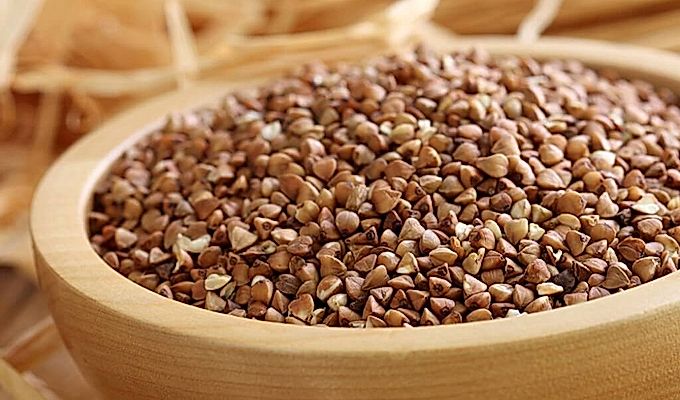
 Buckwheat is a cereal obtained from seeds of sowing buckwheat (an annual cereal of the Buckwheat family). The homeland of the plant is the mountain slopes of India, Burma, Nepal, from where it spread across the globe. The cereal got to the countries of Europe from Greece.
- General information
- Chemical composition
- Beneficial features
- Application in medicine
- Application in cosmetology
- Buckwheat for weight loss
- Conclusion
The product is used in cooking as a side dish for vegetable and meat dishes, for making casseroles and snack pies. In addition, buckwheat has found wide application in medicine: it prevents vitamin deficiency (especially in the winter-spring period), strengthens the walls of blood vessels, increases immunity, activates the intestinal tract, and stabilizes the psycho-emotional background.
General information
Buckwheat is classified as environmentally friendly products, since the technology of its cultivation does not require the introduction of chemicals during sowing. The cereal is cultivated primarily for culinary use [1]
There are the following types of buckwheat:
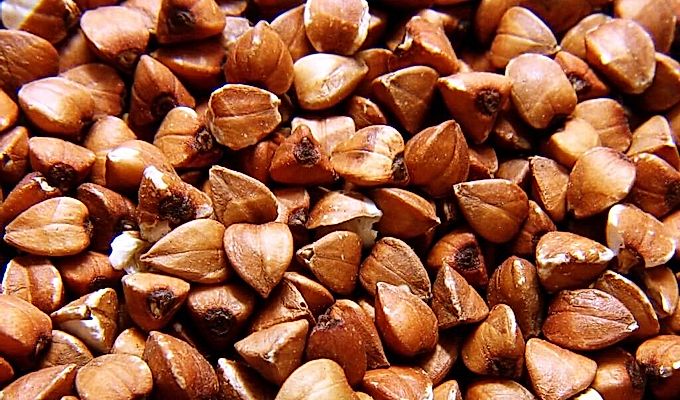
- kernel (whole grain, peeled from the outer shell);
- cut or cut (crushed cereal with a broken structure);
- Smolensk flakes (highly crushed grains).
Classification of buckwheat by type of heat treatment:
- fried (dark brown);
- steamed (brown);
- natural (light green).
Remember, the finer and darker the cereal, the less nutrients it contains [2]
Chemical composition
Buckwheat is the record holder for protein content among cereals. The biological value of the culture protein is determined by 18 amino acids present in the cereal. The highest concentration is found in lysine, tryptophan, arginine, methionine, valine, isoleucine, glycine.
Interestingly, in terms of protein content, buckwheat is a complete alternative to animal protein. To supply the body with this building material, it must be present on the daily menu of athletes, vegetarians, pregnant women and the elderly.
| Item name | Ingredient content in 100 grams of cereal, milligram [3] |
|---|---|
| Vitamins | |
| Tocopherol (E) | 6.65 |
| Niacin (PP) | 4.2 |
| Riboflavin (B2) | 0.2 |
| Pyridoxine (B6) | 0,4 |
| Thiamin (B1) | 0.43 |
| Folic acid (B9) | 0.032 |
| Beta carotene (A) | 0.002 |
| Macronutrients | |
| Potassium | 380 |
| Phosphorus | 298 |
| Magnesium | twenty0 |
| Sulfur | 88 |
| Chlorine | 33 |
| Calcium | 20 |
| Sodium | 3 |
| Trace elements | |
| Silicon | 81 |
| Iron | 6,7 |
| Zinc | 2.03 |
| Manganese | 1.56 |
| Copper | 0.64 |
| Boron | 0.35 |
| Titanium | 0.034 |
| Molybdenum | 0.033 |
| Fluorine | 0.023 |
| Nickel | 0.0101 |
| Selenium | 0.0083 |
| Chromium | 0.004 |
| Iodine | 0.0033 |
| Cobalt | 0.0031 |
The nutritional value of buckwheat includes (per 100 grams):
 proteins - 13.5 grams;
 - fats - 3.4 grams;
- carbohydrates - 61.5 grams;
- water (14 grams);
- organic acids (0.2 grams);
- dietary fiber (11.3 grams) [4]
- starch (55.4 grams);
- unsaturated fatty acids (2.28 grams);
- mono- and disaccharides (1.5 grams);
- saturated fatty acids (0.67 grams);
- amino acids (10.32 grams);
- sterols (0.074 grams)
- ash (2.1 grams);
- purines (0.06 grams).
The calorie content of the product directly depends on the cooking method. So, dry (sprouted) grain contains 330 kilocalories per 100 grams of product, boiled cereals - 150 kilocalories, steamed kernel - 250 kilocalories.
Considering that the cereal contains no gluten (gluten), buckwheat is of particular value for people with celiac disease.
Beneficial features
The effect of cereals on the human body [5]
 Reduces the risk of developing malignant neoplasms (due to the content of natural antioxidants) [6]
 In addition, with regular consumption of buckwheat, the functional state of the dermis, hair, and nails improves.
Application in medicine
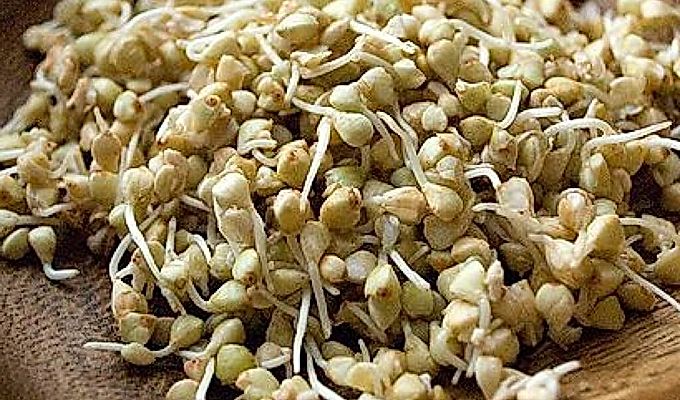
Considering that buckwheat contains a wide range of nutrients, it is successfully used in folk medicine. For the preparation of medicinal potions, whole unroasted cereal grains (green), as well as buckwheat leaves and shoots are used.
Folk recipes:
 A mixture for stagnation of bile, high sugar, pancreatitis, poisoning. To prepare the composition, you will need 15 grams of buckwheat flour and 250 milliliters of low-fat kefir. The first ingredient is obtained by grinding cereals on a coffee grinder, and the second by fermenting homemade milk. Both products are combined and left in the container overnight. The resulting mixture is eaten for breakfast. The duration of choleretic therapy is 1 month. After 30 days, the course is repeated.
 To enhance the therapeutic effect, the powder is washed down with warm milk. The tool is used for at least 30 days (until the condition improves). If necessary, after a month's break, the course is repeated.
Remember, the shoots shouldn't be longer than 1 centimeter.
Indications for use: anemia, obesity, vitamin deficiency, inflammation of the gallbladder, arthritis, pathologies of the organs of vision, atherosclerosis, ischemic heart disease, varicose veins [9]
Application in cosmetology
Buckwheat, along with improving the body, has a beneficial effect on the skin (nourishes, rejuvenates, cleanses, normalizes cellular metabolism). Due to the content of vitamins, phytohormones, organic acids and fats, the cereal is actively used in the composition of professional cosmetics, as well as for the preparation of homemade masks, creams and scrubs. Homemade mixes with buckwheat are ideal for the care of combination, normal and sensitive skin.
Grain-based home remedies:
 A nourishing mask for dry and normal skin. Components of the composition: 30-60 grams of buckwheat flour, 20 milliliters of olive oil. The mask is applied to the previously cleansed moist skin of the face, neck and décolleté for 20-30 minutes. After completing the procedure, the mixture is washed off with warm water.
 With regular use of the composition (three times a week), the complexion improves, the capillaries are strengthened, and the oily sheen disappears.
This mask is used to eliminate puffiness under the eyes, smooth out fine wrinkles, and deeply nourish the dermis.
The scrub perfectly removes dead skin cells of the epidermis, cleanses and tones the skin, and reduces the severity of cellulite.
To enhance the cosmetic effect, after the end of the procedure, a nourishing cream is applied to the skin.
Buckwheat for weight loss
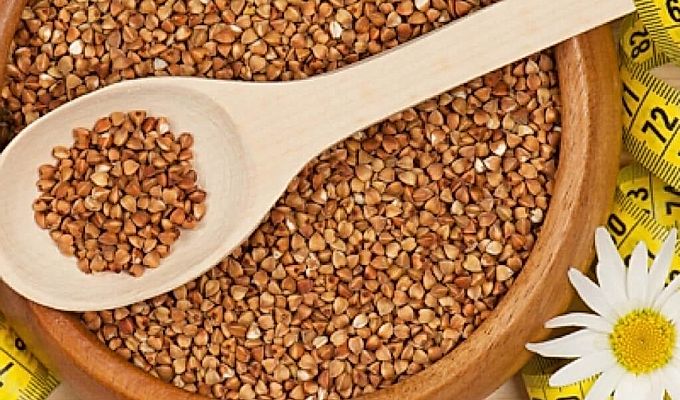 Despite its high energy value, buckwheat has a low glycemic index. This is an absolutely dietary product, on the basis of which many weight loss schemes, fasting days and food rations have been compiled [10]
The effectiveness of buckwheat diets is due to the prolonged breakdown of cereals in the stomach, which dulls the feelings of hunger. At the same time, the body is forced to provide itself with nutrients by burning fat reserves from the depot. As a result, the metabolism is accelerated, and a person loses excess weight faster. In addition, cereals contain many beneficial elements that help those who lose weight lose weight while maintaining a good mood, strong nails, healthy skin and thick hair.
The buckwheat diet is easy to use as it contains cereals and water. The duration of mono meals varies from 3 to 14 days (depending on the goals set). The three-day weight loss scheme is classified as fasting days. It helps the body to cleanse itself of toxins and burn up to 1.5 kilograms of excess weight. To eliminate from 5 to 10 extra pounds, the buckwheat diet is extended to 14 days.
How to cook cereal properly?
Buckwheat is steamed from the evening for the whole next day. For this, 300 grams of washed kernels are poured with a liter of boiling water. The vessel is wrapped in a blanket and left on the stove for 10-12 hours.
Remember, adding sugar, salt or seasonings to a diet meal is strictly prohibited.
With poor tolerance to a mono-diet, it is recommended to use a milder version of the method and include kefir in the diet.
Acceptable power schemes:
The duration of the kefir-buckwheat diet should not exceed 14 days.
To consolidate the result, return to the previous diet smoothly. In the first 4 days of "exit", in addition to buckwheat, eat only easily digestible foods (fruits, low-calorie yogurt, kefir, honey, vegetable salads, herbs), and then gradually increase the calorie intake to normal.
Contraindications to the use of buckwheat diet: gastritis, stomach ulcer, duodenal erosion, diabetes mellitus, intestinal disorders, hypertension, pregnancy, lactation, old and adolescence.
Conclusion
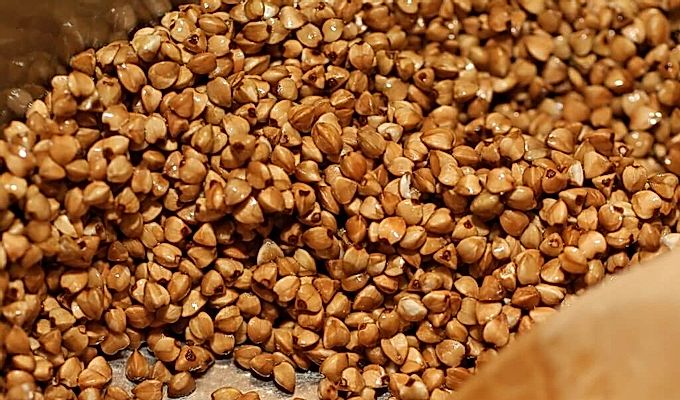 Buckwheat is a valuable dietary product, a record holder among cereals in terms of the content of protein and amino acid structures. The cereal contains a large amount of iron and B vitamins, which are "responsible" for the proper functioning of the hematopoietic, nervous and immune systems. With regular intake of buckwheat, the walls of blood vessels are strengthened, the work of the intestines is activated, the swelling of internal organs decreases, the risk of thrombosis is reduced, cerebral circulation improves, and the psycho-emotional background normalizes.
In traditional medicine, kernel is included in the diet of people suffering from anemia, celiac disease, diabetes mellitus, hypertension, obesity, arthritis, rheumatism, chronic fatigue syndrome, stomach ulcers, atherosclerosis, constipation [11]
On the basis of buckwheat grains, decoctions, ointments, poultices, jelly are prepared, which help to fight heart and endocrine disorders, skin pathologies, and malignant neoplasms. Along with buckwheat grains, leaves, stems, flowers and plant husks are used. For example, the upper shell is used to fill orthopedic pillows (to eliminate insomnia, anxiety), buds and seeds - for making baby powders, flour and leaves - for healing wounds, boils, abscesses.
Remember, regular intake of buckwheat (2-3 times a week) reduces the risk of heart attacks and strokes by 70%, prevents the development of anemia, and improves the functional state of the digestive tract.