- An example of how to properly drive moonshine at home
- How to make moonshine on wheat at home - a classic recipe
- How to make mash for moonshine on wheat without yeast and sugar
- Homemade moonshine on sprouted wheat without yeast with sugar
- Moonshine on wheat with yeast and sugar at home
- How to make moonshine from unsprouted wheat with sugar and yeast
- How to make mash for moonshine from wheat with peas at home
- The recipe for making homemade moonshine on a video from youtube
Today our topic is moonshine. If in the good old days they could have been detained for this activity, and the equipment could be confiscated, now you can buy moonshine stills in many stores.
In general, good homemade moonshine is still better than alcohol. It is not for nothing that in the production of tinctures or liqueurs, many people use their own home-made moonshine instead of alcohol or vodka.
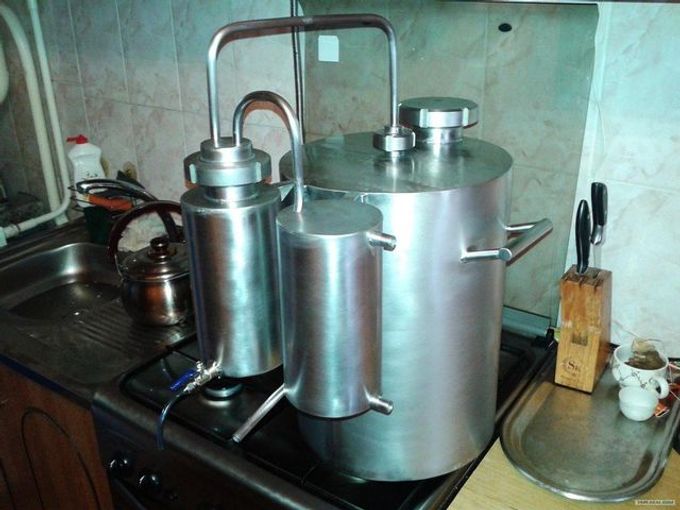
Is it necessary to use yeast to make moonshine, or not? Those who have been doing this for quite a long time say that there is no difference. The end product will be equally good. It might just taste a little different. The main difference is only in time: if you need to cook it quickly, you will need yeast. And if there is a lot of time and there is nowhere to rush, then it is better to do it without yeast. In this case, moonshine gives off fresh bread, and mash must be made on wheat.
If during the distillation process it is necessary to clean moonshine from unpleasant odors and fusel oils, then you can read how to do it correctly in the article “Cleaning moonshine from smell and fusel oils”
This is exactly such a wheat version with and without yeast, we will consider in today's review.
An example of how to properly drive moonshine at home
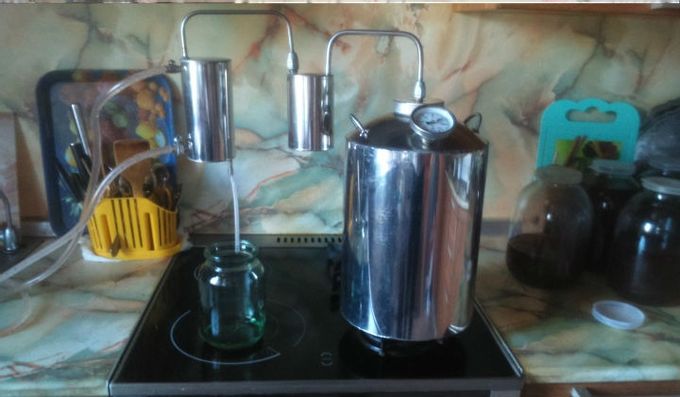
Before reading all the other recipes, I suggest remembering how the mash distillation process takes place. The same procedure if you decide to do a second distillation. Read more…
How to make moonshine on wheat at home - a classic recipe
To begin with, consider a simple and classic recipe for making moonshine.
To do this, you will need to take:
- Wheat grain - 2 kg.
- Water - 15 liters.
- Sugar - 4 kg.
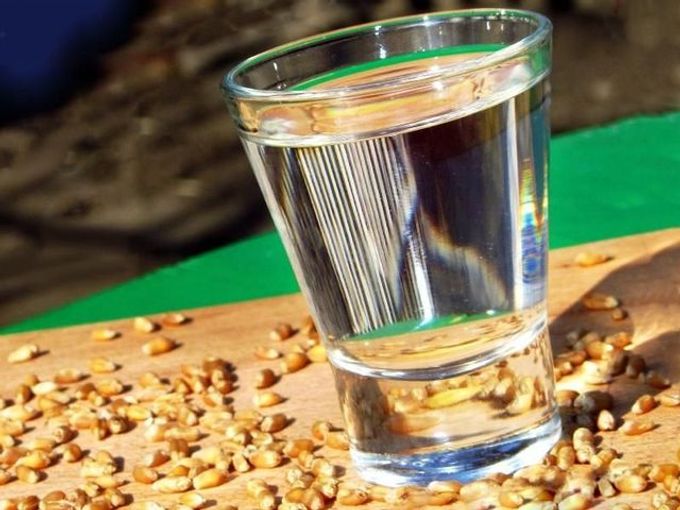
The main product for the preparation of moonshine is wheat, or rather its grains. But they do not use the grains themselves, but the sprouts that germinate from these same grains.
It may seem to someone that, as a result, the preparation of moonshine because of this will be somewhat delayed. However, if you want to get a quality product at the output, you will have to wait a bit.
So, we buy wheat grains, select the best of them without spoilage. In addition, the grains must be whole and not smell of rot. If it is possible to find out the age of the grain, then it is better to use it at the age of two months to a year. For better germination of seeds, they will need to be dried. Do it in the sun, if the weather permits, or in the oven at a temperature of 30 to 40 ° C, while the oven does not need to be closed.
After that, the wheat is well washed in several waters, and after that you can begin to germinate it.
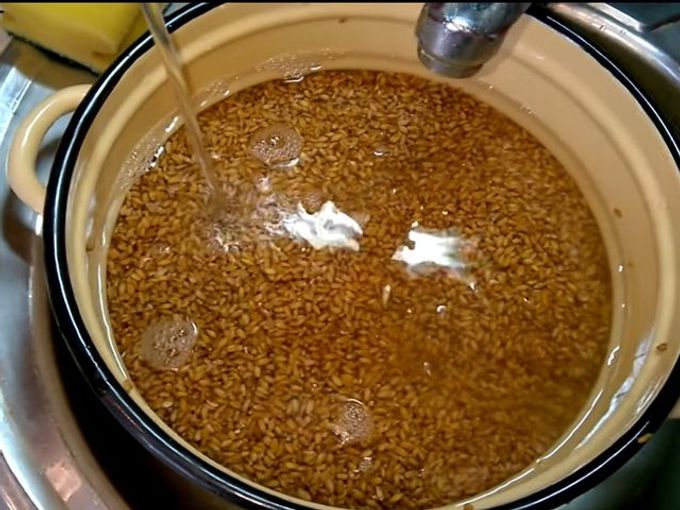
We put the wheat in a saucepan, fill it with warm water so that it swells. It is advisable to change the water every 10 hours. This will help prevent souring of the grains. Although some keep a day without a change of water. After a day, we look - the wheat swelled, and even seedlings appeared on some grains. Again, we wash the grains. Then put on a pallet or leave in a saucepan. Cover with a damp cloth so that the grain germinates.
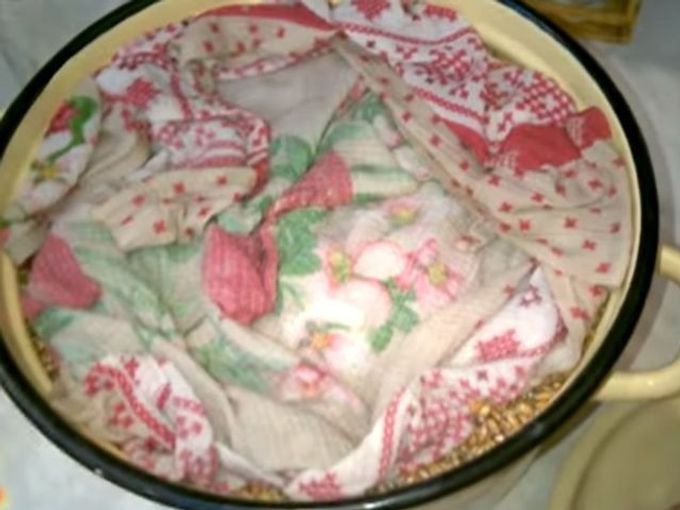
At the very beginning of germination, the grains will need to be mixed to enrich them with air. We do this for five days. Then for the next five days we keep the grain container simply closed. When sprouts with roots appear on the grain, it will be possible to proceed directly to fermentation.
Pour again everything with warm water and fall asleep with sugar. Then we close the lid, install a water seal and put it on fermentation.
We learn about the end of the fermentation process by the water seal when the release of bubbles stops. After that, we proceed to the distillation of the mash. For this, you will already need a distillation or moonshine still.
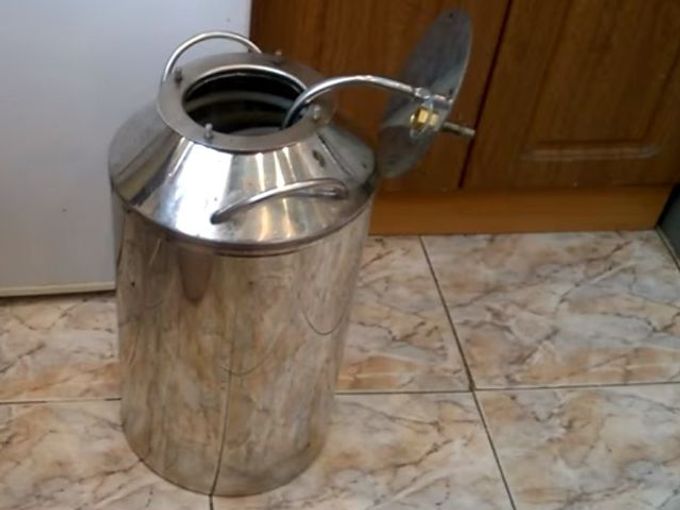
We pour the mash into the apparatus. This is done through a sieve so that the grains do not get into the distillation. Then the race starts. The distillate is taken until its strength is above 35 degrees.
After the first distillation, a second one is made, but it is not mandatory. But experts advise doing it to improve the quality of moonshine. Before starting the second distillation, we dilute the distillate with water by 50%. It is advised here that the first 50 ml per liter of moonshine be collected separately. They are no longer used, since they are considered a harmful fraction. The selection of the second stage of distillation stops when the strength of the final product reaches 40 degrees.
The fortress of moonshine after the second distillation is usually 70-80 degrees. It is recommended to dilute it to 40-45 degrees, after which it can be consumed.
How to make mash for moonshine on wheat without yeast and sugar
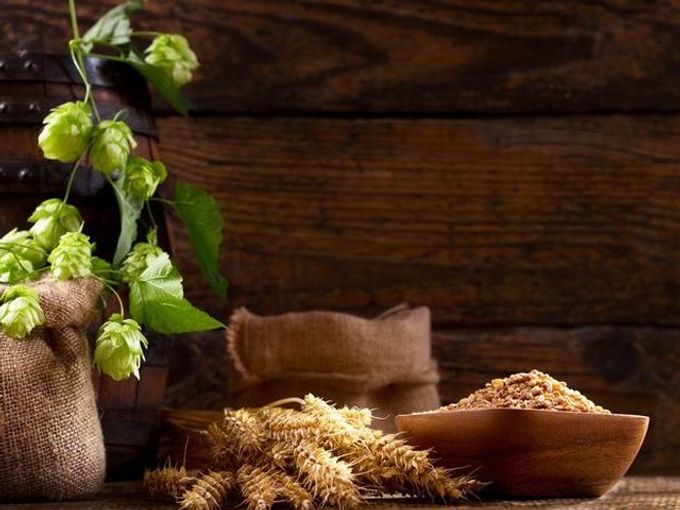
In the previous version, yeast could be added. They are placed at the stage of malt fermentation in mash. However, there is a simple cooking option without yeast and sugar. If everything is clear with yeast, then how to do without sugar? It's very simple, the most common hops will help the fermentation without sugar.
True, despite the simplicity of the recipe, making moonshine according to it is a rather laborious process. However, the result is no less good.
The complexity of preparation lies in the fact that it is carried out in two stages. The first is the steaming and the second is the preparation of the malt.
Each stage will require its own components.
- Wheat flour - 400 g.
- Water (clean) - 2 liters.
- Hop cones - a couple of handfuls
Flour is desirable to use coarse grinding.
- Wheat grains - 3 kg.
- Water (clean) - 6 liters.
According to experts, moonshine according to this recipe is very strong. So, we prepare grains for malt. We sort, clean from debris, leaving only good grains. We put them in a container, for example a saucepan, pour warm water so that it covers the grains by three centimeters. We cover the container with a rag or gauze, put it in a warm and dark place for three days for primary fermentation. The result should be the appearance of a film, which indicates that the local yeast has fermented.
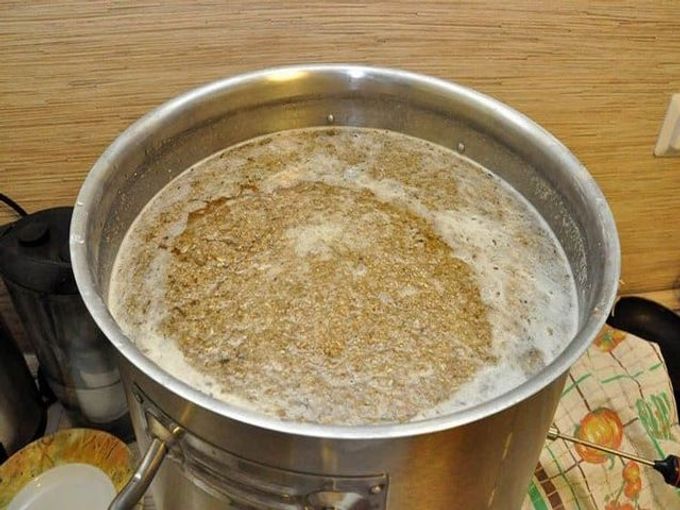
While the malt is being prepared, you can do another stage of moonshine - brewing. We put flour and hop cones in a container, fill it with water. Then we close the lid, put it together with the first pan in a dark and warm place for three days.
After three days, we take out the malt and zaparka, merge them into one container. Mix well. For active fermentation, you can add a few apples to the mash. This is necessary to nourish the yeast that develops without sugar.
Mix thoroughly the whole mixture, pour another five liters of water. After that, from the pan, where mixing and addition was carried out, pour the mixture into a bottle and put a water seal. Instead of a water seal, you can use a glove, as in winemaking. Here we do not forget to pierce a small hole.
It remains to put the fermentation container in a warm and dark place, where the mash will ferment until it fully ripens for about 15 days.
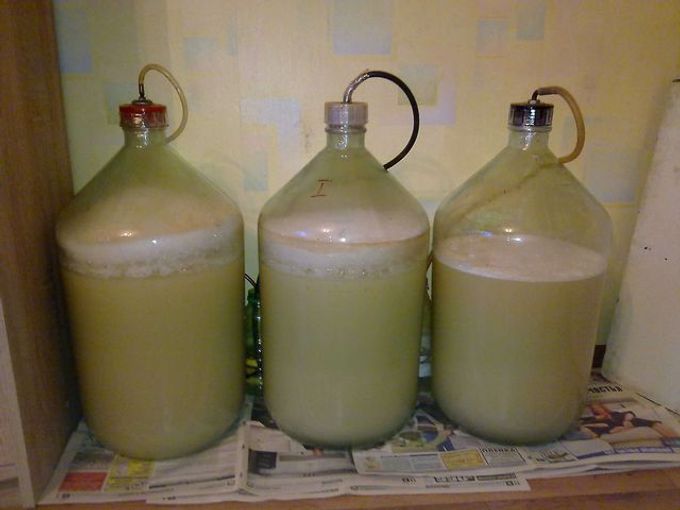
Braga will be ready, you can start distillation. In addition to the water seal, you can determine the readiness of the mash by its color and taste.
The distillation process is carried out in two stages. As a result, the drink at the exit will be strong, clean and without foreign odors.
Homemade moonshine on sprouted wheat without yeast with sugar
Here I will present another simple recipe for making moonshine without yeast. But sugar, unlike the previous recipe, we need.
- Wheat grains - 5 kg;
- Water - 15 l;
- Sugar - 6.5 kg.
So what needs to be done. Unlike the previous options, this process is a little simpler.
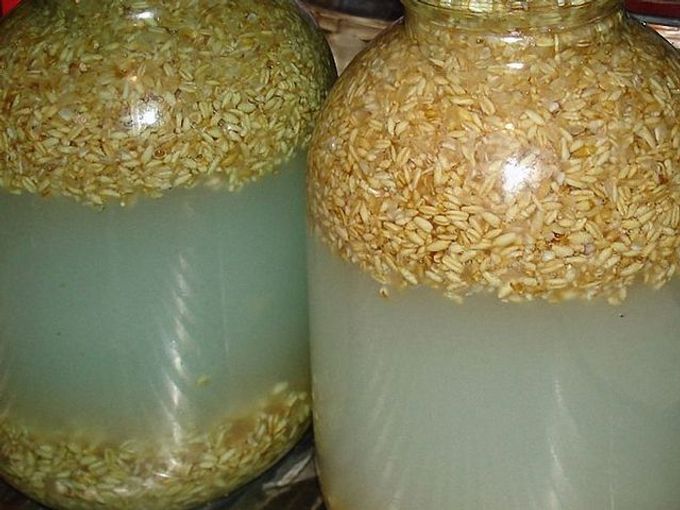
We start with the germination of wheat grains. We select the best grains, wash them and fill them with water. We are waiting for the first shoots to appear. They will not be on all grains, but this is not scary, because germination has not yet ended. Now we will add sugar. But first, we put all the germinated grains in a separate container. It can be a saucepan or a plastic food box - a container. A container is needed such that all five kg of sprouted grains fit and there is still room for water. Then fill with water so that it covers the grains by about 2 mm. Then pour 1.5 kg of sugar.
Let's keep growing. At the same time, periodically mix the whole mass. When sprouts appear on almost all grains, we shift everything into a large bottle.
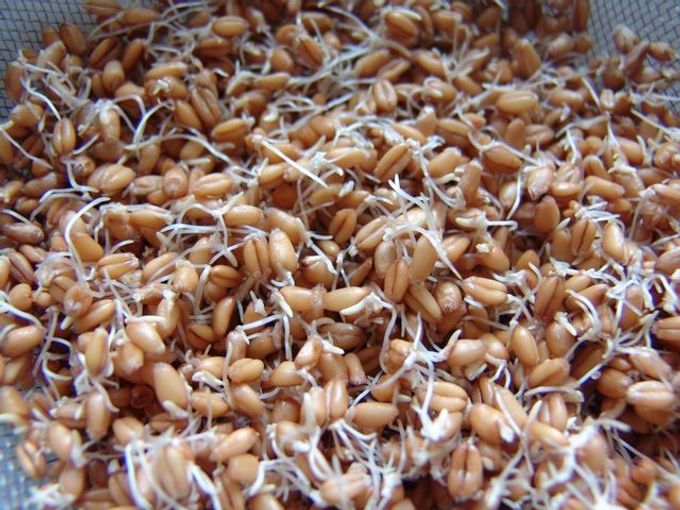
Add that even all the remaining sugar, pour fifteen liters of water. We close the bottle with a water seal or a rubber glove. We remove the bottle in a warm and dark place for fermentation. You can recognize the end by a water seal or a dropped glove - just like when making wine. Also, the formation of bubbles will stop. You can also check the taste and color. If everything suits - the mash is ready. Now we proceed directly to the distillation of mash into moonshine. Pour it into the apparatus and carry out a double distillation.
Since yeast is not used in this option, then with the above number of components, we will get about 5-6 liters of moonshine at the output. If you want more moonshine, then you will need to double the proportions of the components. But the main advantage of such a product will be that moonshine prepared without the participation of yeast at the mash stage has a more pleasant smell. And this will affect his taste.
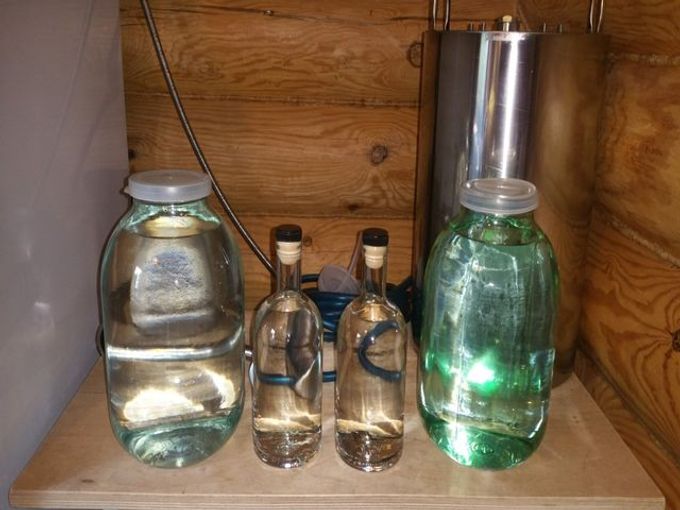
When you distill moonshine, do not forget about some of the intricacies of this process. So, for example, simple or fractional distillation is usually done. With a simple distillation, the output is only raw alcohol. Moreover, its first drops contain harmful impurities and a not very pleasant smell is felt.
Fractional distillation takes longer than the first option, but the moonshine undergoes a complete purification, as a result, all harmful impurities will be removed from it and you will get the purest moonshine with a pleasant taste and smell.
By the way, in Soviet times, in the villages, moonshiners just did not bother with the second distillation, getting a surrogate at the output.
When you distill, the first 10% of the resulting alcohol, this is the so-called head fraction, is poured out. They contain that acetone smell and smack of moonshine.
The tail fraction, like the head fraction, contains fusel oils that spoil the taste and smell of moonshine. Therefore, they get rid of it. It turns out that for drinking moonshine we choose the middle part.
Moonshine on wheat with yeast and sugar at home
In this recipe, we will use yeast already during fermentation. But there is another interesting component that is added to get rid of fusel oils, this is kefir or fermented baked milk.
- Wheat grain - 3.5 kg.
- Water (clean) - 25 liters.
- Sugar - 6 kg.
- Yeast - 100 g dry or 500 g pressed.
- Kefir or fermented baked milk - 500 ml.
Sugar is advised not to regret. The larger it is, the greater the distillate yield can be. The beginning, like all recipes, is the same. First of all, we germinate the wheat.
For such a large amount of grain, a baking sheet from the oven is suitable. Wheat is laid out in a thin layer on a baking sheet. Then it must be filled with warm water so that it covers the grains by about a millimeter. The main thing is not to drown the grains, otherwise they will not germinate. Now put the baking sheet with wheat in a warm place. The temperature must be at least 20 degrees.
Three days later, the first shoots will appear. If they are not there even after 4-5 days, then it is no longer worth keeping the grain for germination. It is of poor quality and it is better to throw it away and start with a new batch.
Grain during the germination period should not become moldy or sour. To prevent this from happening a couple of times a day, it will be necessary to mix the grain. Use only a wooden spatula.
When the sprouts stretch and reach about two cm, they are taken out of the water and prepared for further processing. Here you can either grind the sprouted grains into flour, or use them as they are.
At the next stage, we prepare a container into which we pour warm water and pour sugar. Now stir until sugar dissolves. Then we take the yeast and dissolve it in a small amount of water. While they stand for a couple of minutes, we put malt from germinated wheat into the syrup. Then add yeast and mix well.
It remains to close the container with a lid and install a water seal. We put the mash in a dark and warm place.
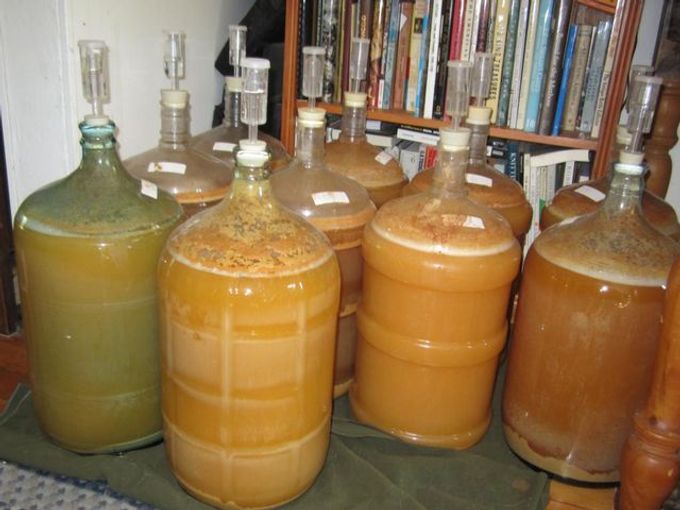
It remains to wait for the braga to come. After its readiness, we check for taste, color, and the appearance of sediment. Then we drive through the filter to remove sediment and grains. As a filter, you can use a sieve, cotton wool or gauze.
Then we move on to racing. But before pouring the mash, pour ryazhenka or kefir into the apparatus. After the first distillation, many experienced distillers purify the moonshine with a charcoal filter. They say that after that the drink will become cleaner, softer. After the first distillation, a second must be done. As a result, moonshine will become tastier and stronger.
How to make moonshine from unsprouted wheat with sugar and yeast
When preparing mash for moonshine using wheat, grain is most often germinated. But there is an option when you do not need to germinate anything. This method of preparation is somewhat simpler in that it saves those three or four days during which the grain of wheat germinates.
- Wheat grain - 4 kg.
- Water - 15 liters.
- Sugar - 1 kg.
- Yeast - 100 g.
Wheat should be of the highest grade, sorted out. All bad grains with spots, mold, etc. and all non-whole grains are removed.
Then all the selected grains must be crushed or ground. This can be done with a blender, or through a meat grinder.
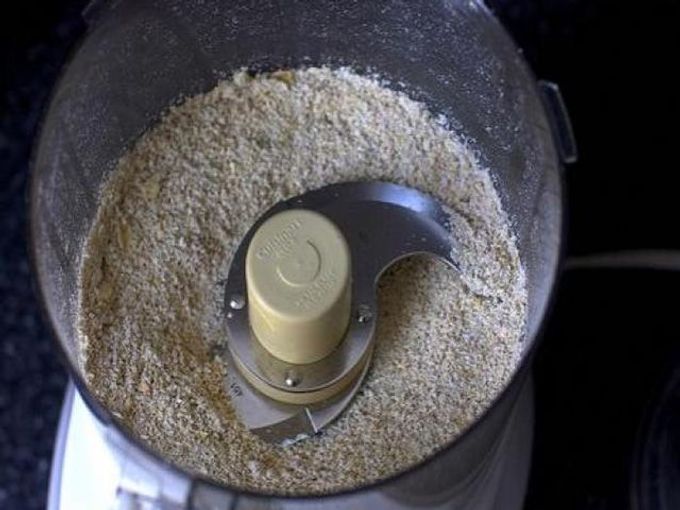
It is necessary to grind the grain to the state of flour. Then we take the yeast and dilute it in water. It remains now to mix all three components: flour, sugar and yeast. The mass is well mixed and poured into a fermentation container. Fill it with prepared water. The water must be clean, not from the tap. Then the container with the base for the mash is placed in a dark and warm place. The temperature should be room temperature or slightly higher, but constant without drops.
The future mash will stand for about a week. A water seal or a glove will tell you about the end of fermentation, depending on what you have installed. In addition, you can check for bubbles that have stopped forming, and sediment should fall to the bottom.
If all this happened, then you can start distillation. But first we filter the mash. All turbidity and sediment will remain on the filter (this is cotton wool, gauze, sieve), and the liquid purified in this way is poured into the moonshine still. It is necessary to distill, as in all other cases, twice.
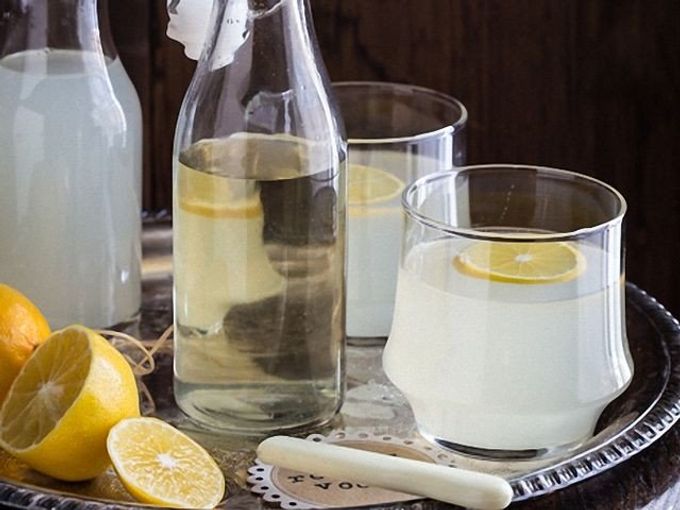
If you use an apparatus with a distillation column for processing, you can get raw alcohol. It is suitable for making vodka, various tinctures on herbs or berries. And if you add any other components to such moonshine, for example lemon, you can get a special flavor.
In order to constantly brew moonshine from wheat, you need to take into account that the cereal that you bought for storage and further use is demanding on storage conditions. It is necessary to keep the grains only in a well-ventilated area and make sure that moisture does not get on them and they do not become damp.
Otherwise, such grains will not give the final product the taste and aroma that you expect from it.
How to make mash for moonshine from wheat with peas at home
It was said above that you can achieve a certain taste in moonshine by adding any other components to it.
One of the components, peas, which can be used together with wheat in the preparation of home brew. Many make mash and just on peas.
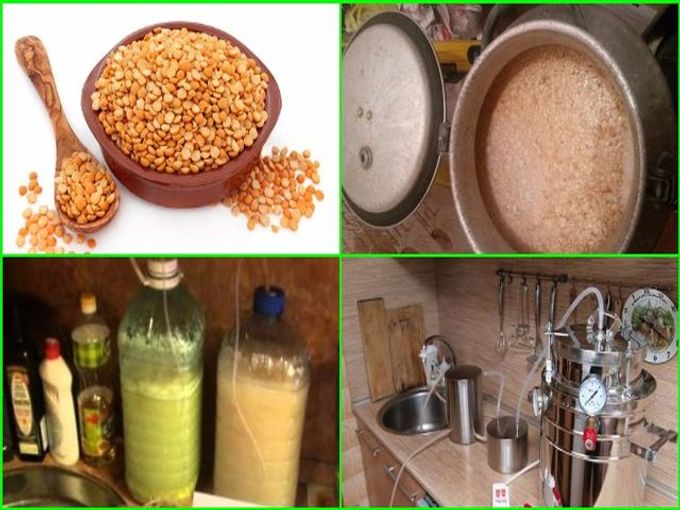
First I want to give a recipe for quick moonshine. If you want to make moonshine faster than usual.
- Peas - 2 kg.
- Wheat - 2 kg.
- Water - 25 l
- Dry yeast - 50 g
- Sugar - 4 kg
- Sour cream - 200 g
In addition to these components, sour cream will also be needed for fermentation. We take it in the amount of 200 g.
We take a container for fermentation. Pour warm water, put peas, sugar, pre-diluted yeast and ground wheat. How to grind wheat was mentioned in the recipe above about making moonshine not from germinated wheat. We use a blender for this. Then add sour cream.
We mix everything well and put the container with the contents (previously putting on a water seal) in a warm and dark place for fermentation.
In about three or four days, the mash will be ready. Before starting to distill it, we filter the liquid, and the remaining sediment can be reused by adding sugar and water to it.
And now for the moonshine recipe, which requires a longer cooking time, those are the standard method.
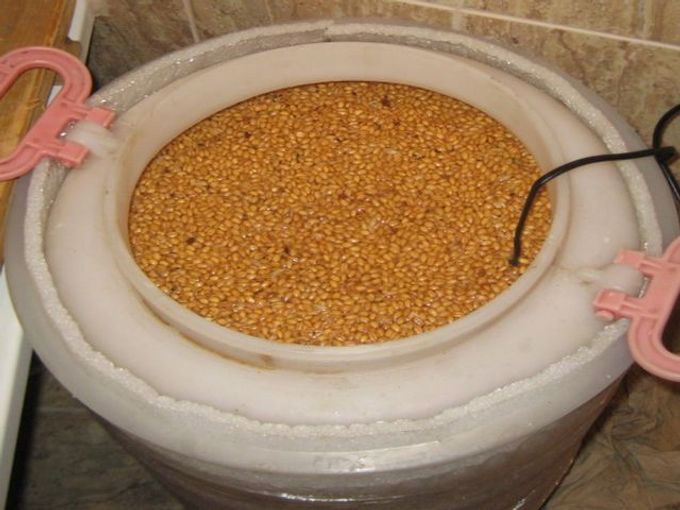
- Peas and wheat grains, 2 kg each.
- Water - 35 l
- Sugar - 2 kg
- Dry yeast - 60 g
- Sour cream - 200 g.
But here we have to first germinate the wheat. When it is ready, you need to soak the peas to soften it. We put peas in a container, fill it with water so that it is completely in the water. We leave it like that for 4 hours.
While the peas are soaking, prepare the sugar syrup for the mash. To do this, put the pan on the stove, pour three liters of water into it and add sugar. Cook the syrup until the sugar is completely dissolved while stirring. Then take the pan off the heat and let it cool down.
We dilute the yeast and also let them stand for a couple of minutes. Then you can start mixing the components. We take a container for fermentation - usually these are large plastic cans. Pour the rest of the water into this container (part of it was used to make syrup), put the yeast., Pour out the syrup, add the sprouted wheat and softened peas. Do not fill the entire volume of the container. Now we close the container with a lid, put a water seal and put it in a dark place where room temperature is kept.
I have seen the use for the preparation of mash, ordinary aluminum milk cans, which are used in cowsheds. In villages, this is the most common fermentation tank. No water seals are installed, but the readiness of the mash is periodically checked. True, those who already have experience look into the can only when the necessary time has passed.
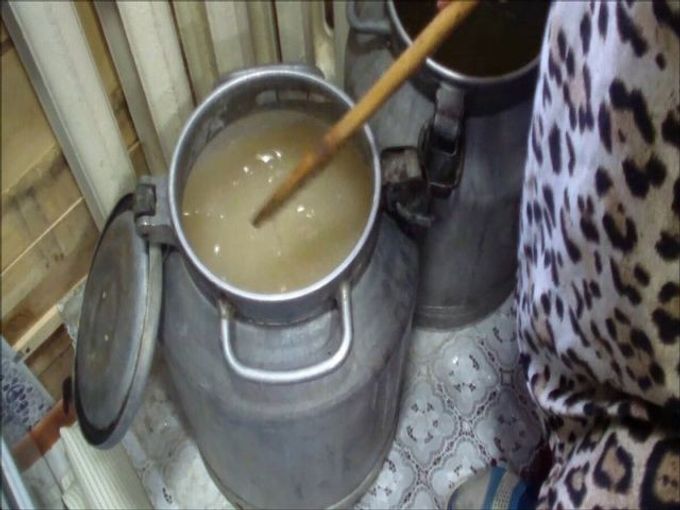
Fermentation takes place for 7-10 days, a sediment appears at the bottom, the liquid becomes bitter in taste, and light cloudy in color.
Braga is ready and you can start distilling or distilling it. Previously, all the mash is filtered through gauze. It is poured into the apparatus or, as it is called, a distillation cube.
The first distillation takes place without separation into fractions of the final product. As soon as the strength of the product falls below 35%, it is necessary to stop the distillation.
The resulting moonshine is diluted to a strength of 20% and run again. But at the same time, the output is already divided into fractions. The first part of the output of 15-20% of the distillate is removed because it contains harmful impurities.
Choose only the main faction. We monitor when the percentage of alcohol does not fall below 40%. What remains can be drained into the mash before pouring it into the alembic.
As a result, we should get a distillate, the strength of which is 40-45%. You can taste the final product or moonshine right away. However, it is often recommended to let it brew for three days, and then try it. It is believed that during this time moonshine will pick up its characteristic taste and aroma. If you are able to withstand this time, then taste the drink a little later. Although, for the experiment (this is if you are making moonshine for the first time), you can try it immediately at the exit, and then after a couple of days and compare if there is a difference.
That's all the subtleties of home brewing, and at the end a short video about this process.
The recipe for making homemade moonshine on a video from youtube
Try it and share your experience.