- Plum wine at home a simple step by step recipe
- How to make homemade pitted plum wine with apples
- Homemade plum wine with pit kernels, recipe with a glove
- How to make plum wine at home through a meat grinder
- How to make homemade yellow plum wine
- Cooking plum wine with pits at home recipe with a glove
- Things to know (Q&A)
Today we continue our winemaking theme and we will make wine from plums.
In general, there are a lot of raw materials on which you can put good wine. In addition to grapes and apples, these are cherries, raspberries, currants, and much more. But grape, apple and plum wines are still considered the best.
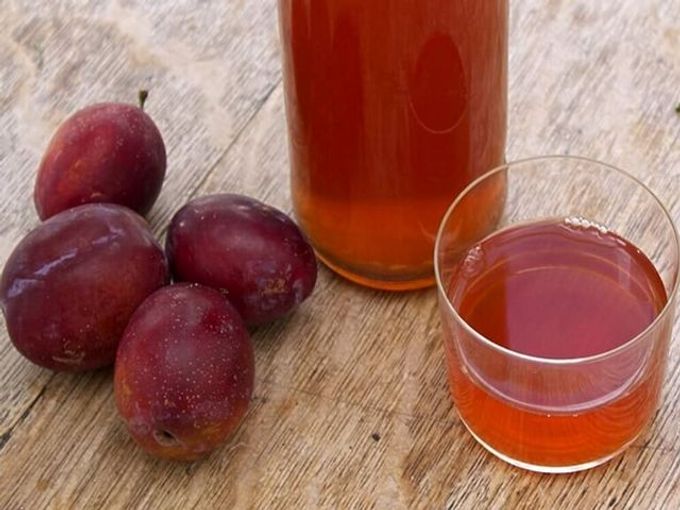
If you grow plums in your garden, then at least try to make wine from it.
In the following sections, we will take a closer look at the various recipes for making plum wine. As with any wine, plum wine needs juice. However, there is a small nuance here: unlike other wine ingredients, the plum is very “reluctant” to give juice.
Therefore, it is best to collect the plum that has either already fallen off, or is just about to fall off. After you have collected the plum, it must be left under the open sky for 2-3 days, so that it wilts and more yeast appears on it, which is necessary for further fermentation.
We remove only bad plums - rotten fruits or spoiled ones. It does not need to be washed, if it is very dirty, then it will only be necessary to wipe it.
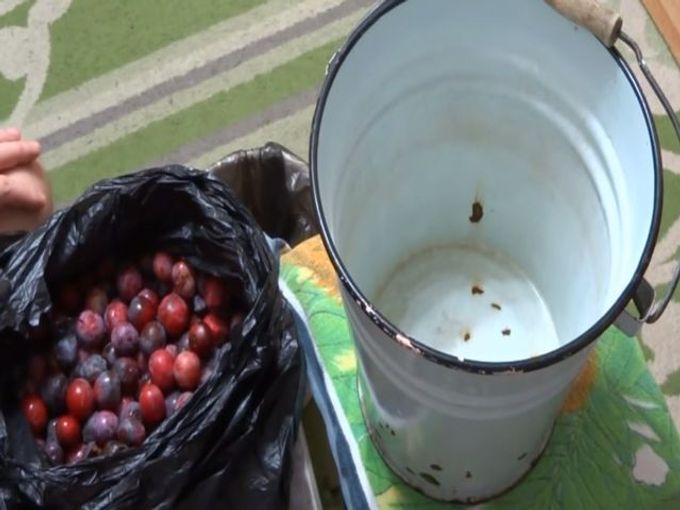
So, the plum was collected, sorted out, and kept in the sun for a couple of days. Now we need to proceed directly to the preparation of the plum.
Plum wine at home a simple step by step recipe
There are two options for making wine: those with pits, those made from whole plums, and those without pits. In this recipe, we make wine from pitted plums. Therefore, all collected plums must be separated from the pits. Break in half and remove the bone. As a result, we get a certain amount of pitted plums.
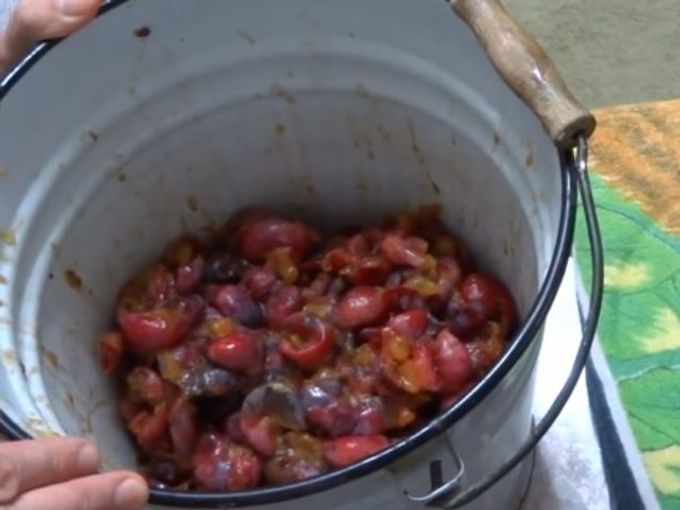
And one more thing, if the juice from grapes or apples for wine is not diluted with water, then here we add water in a ratio of 1:1. Also, you will need sugar and raisins.
Ingredients needed for wine:
- Plum, already pitted - 2.5 kg;
- Water - 2.5 liters;
- Sugar - 150-300 g per liter, diluted juice
How to make pitted plum wine:
After the plum has been separated from the pits, it must be mashed to a puree state. To do this, take a crush for making mashed potatoes and knead everything thoroughly.
Kneaded, now we take water, it should not be clean from the tap, pour it into the drain. Pour, I repeat, in a ratio of 1: 1.
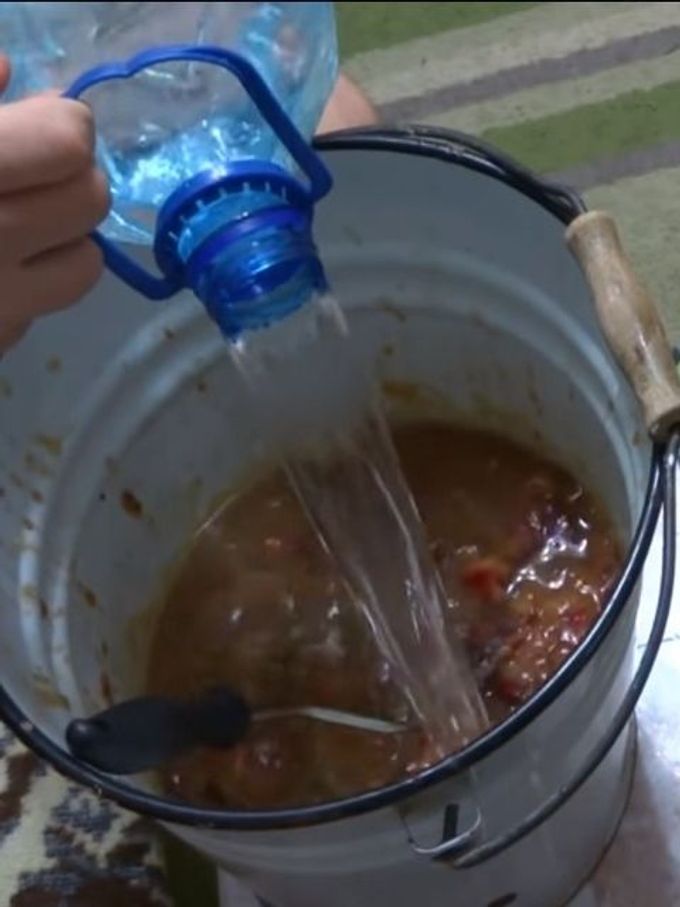
Poured, now mix the whole mass and cover the container with gauze or a lid. We put the container in a dark, warm place for 2-3 days for primary fermentation. In this case, do not forget to periodically stir the wort. This is done about 2-4 times a day. As a result, we knock down the rising cap of the mezdra and do not let it turn sour.
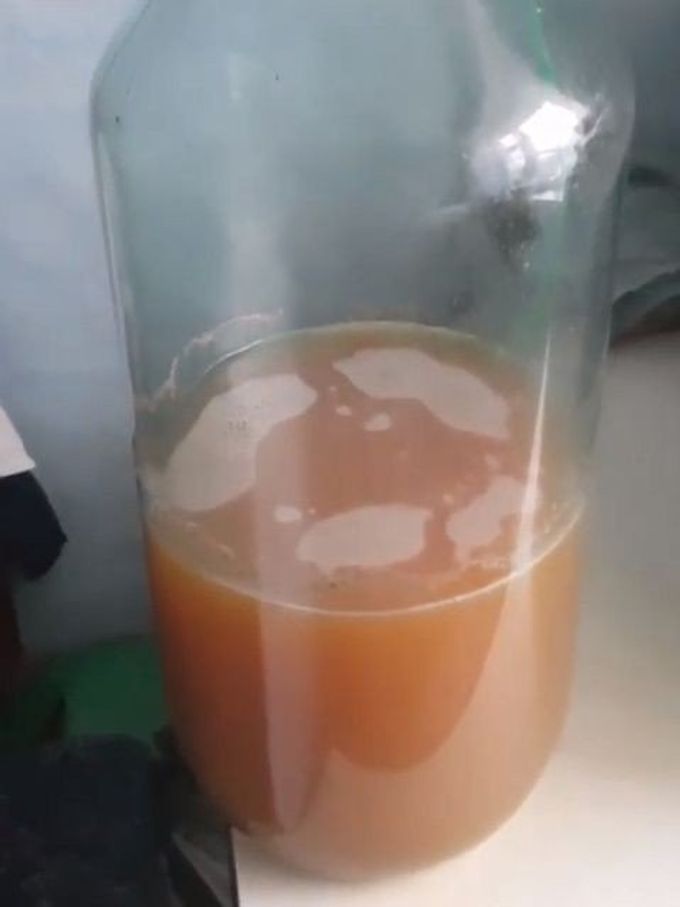
In a day, the wort will already ferment, opening the container we will see the following picture:
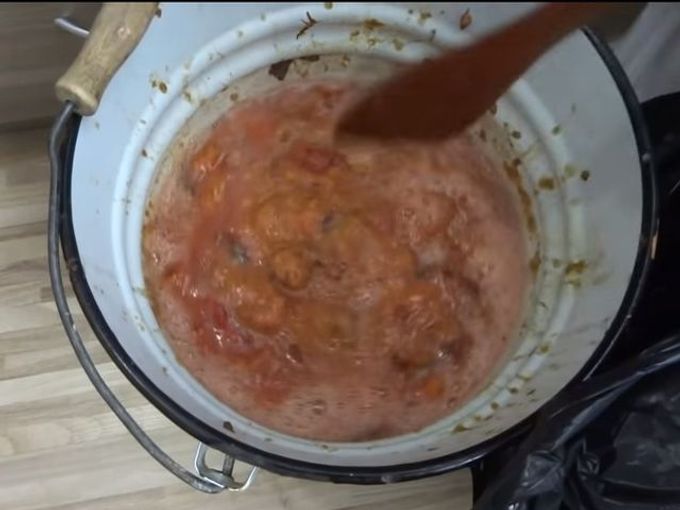
Mix and close again. Fermentation is intense - it's very good.
After three days, we open the container and proceed to filter the wort. To do this, use gauze and a colander. Scoop or spoon, take out the mezdra and put it in a colander.
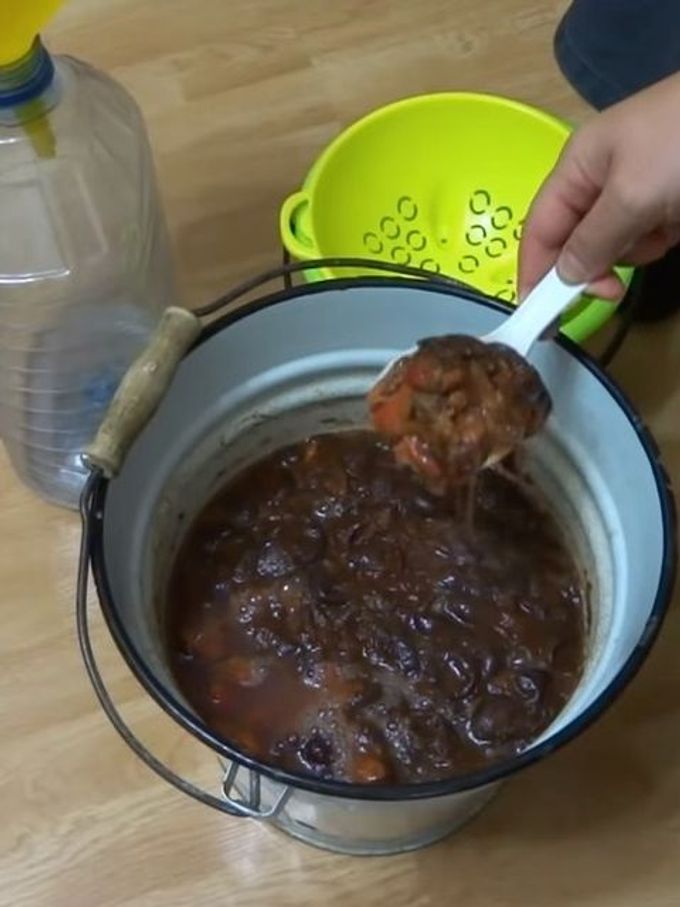
We filter the juice, squeeze the pulp well and you can already throw it away - you won’t need it anymore.
Now we drain all the juice that has begun to ferment into a container in which it will ferment further. We use a bottle, a jar or any other glass, plastic or enameled utensils.
Pour juice, add sugar. Sugar is added at the rate of 150 to 300 g for each liter of ready-made juice poured into a container. So, if we filtered, poured and got 4 liters, then to make semi-sweet wine, you need to add 300 g of sugar per liter. The total will be 1200 g. If your plum is very sweet, then add 150 g each, then you will get a wine closer to dry.
Sugar is not added all at once, but in portions. In the first call 600 g, the rest - later, after the start of fermentation.
Pour the sugar into the juice and stir. Some pour out part of the juice and carefully dissolve the sugar in it, until it is completely dissolved, and then pour it back. I don’t know if it’s worth doing this, you can, in principle, add it immediately to the juice, mix and leave. Even if the sugar is not completely dissolved, it will still ferment and gradually the yeast will eat it.
The juice in the container should not be poured to the very top, but a little more than half. We put a water seal or a glove, put it in a dark and warm place for fermentation. After a day, bubbles will appear in the jar.
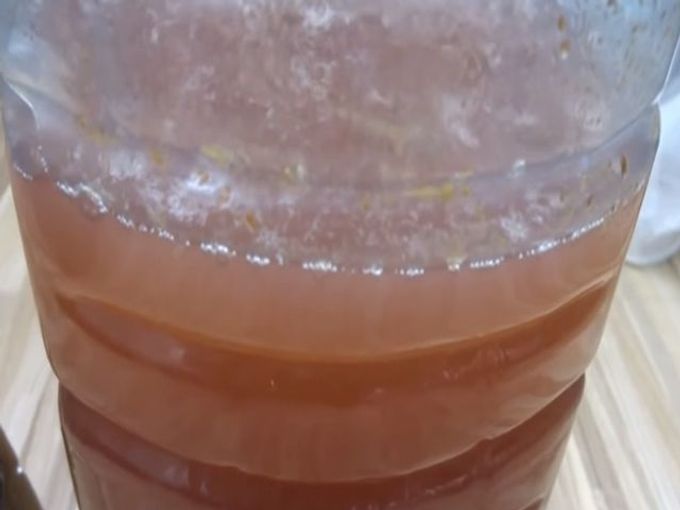
It started the fermentation process, everything is going as it should. About five days later, add the remaining sugar, which was divided before fermentation. We leave to ferment completely until sediment falls out and fermentation stops. The temperature in the room where the fermentation tank is located should be between 18-28 degrees.
Slivyanka will stand a little longer than in the manufacture of other wines. This is due to the fact that it turns out to be very cloudy and the precipitate falls out for a long time. But be that as it may, the wine stopped bubbling, the sediment settled, and the fermentation ended. So it's time to remove the sediment.
This is done with a silicone hose. We lower one end into a jar of wine. And the other in a clean container. It is necessary to lower the hose so that it does not touch the sediment, as it is very light and can be pulled into the tube.
By the way, in one of the descriptions I read that a barrier filter is used for filtering. I decided to try:
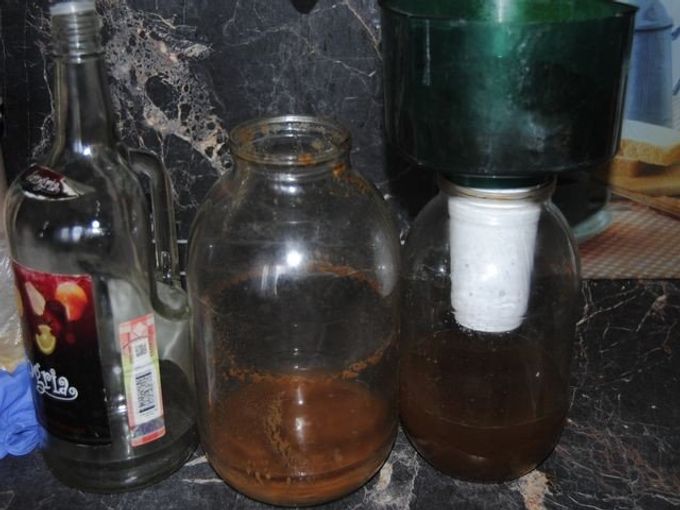
It even turned out quite well. The sediment also remains in the filter, and the purified wine is poured into a jar.
So, filtered, pour the wine into a jar, pour it all the way to the throat and close the lid.
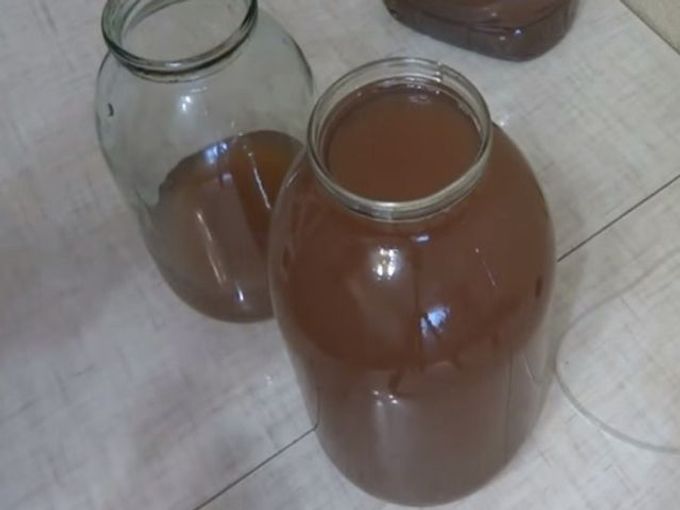
We put the container in a dark place, for a now quiet fermentation for two weeks. Moreover, the temperature in this room should be much lower than during intensive fermentation, otherwise the wine will begin to ferment again and turn into vinegar.
After two weeks, check for sediment. The precipitate fell out, not the same as the first time, but there is. Pour in the same way, using a silicone hose. Let's take a little to sample. In principle, sugar, taste - in moderation. If somewhat sour. You can add quite a bit of sugar. Now again we leave for three weeks. After this period, we will practically not find sediment.
Now we pour the finished wine into bottles, close it tightly and put it away for storage. In principle, you can try it, but if it stands a little longer, for example, for a month, it will pick up even more taste.
How to make homemade pitted plum wine with apples
The recipe you're about to get is not exactly the same. The fact is that in addition to plums, apples will also “participate” in the preparation of wine. Of course, you can not add them, but it’s probably worth trying to make such a fruity wine, at least for the sake of experiment. Suddenly like it.
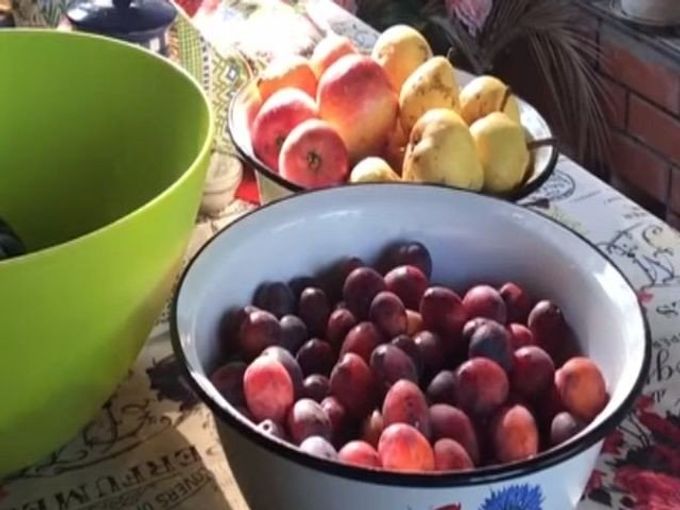
By the number of plums, the main part is taken, and quite a few apples are enough. So for 1 kg of fruit you need 80% plums, and the rest - apples. In addition, for this weight we take 1 liter of water and 300 g of sugar.
At the first step, you must first sort out the plum and apples. We remove bad, rotten fruits. Now the plum must be separated from the pits. Break them in half and remove the bones. Cut the apples into small pieces.
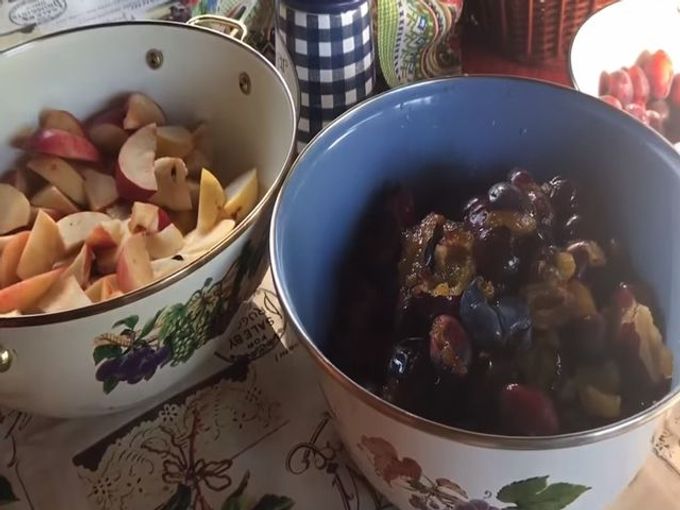
At the next stage, we select the necessary container, for example, a glass jar, a plastic bucket or an enamel pan. Pour fruit into this prepared and clean container first, then sprinkle with sugar.
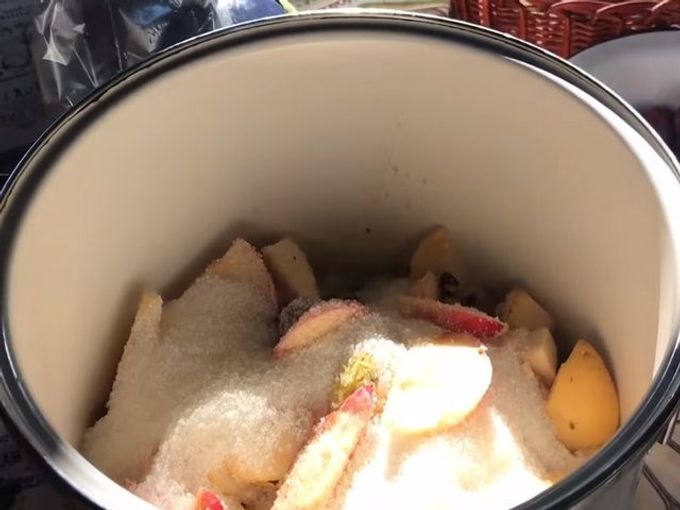
After that, pour water into the pan and mix the whole mass.
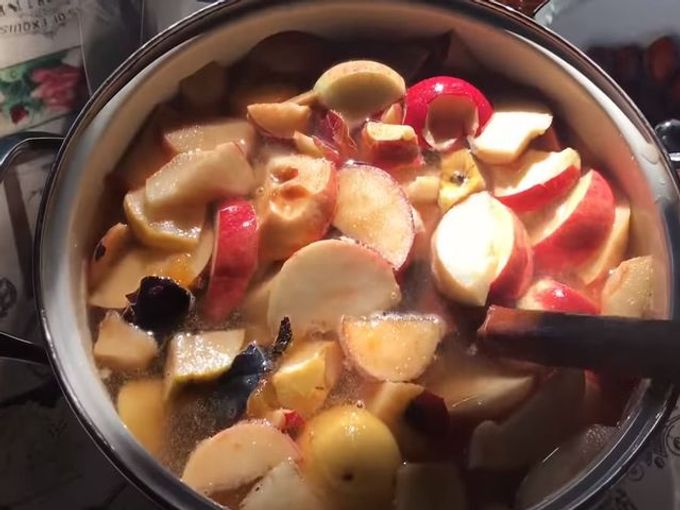
Now we close the container with a lid or tie it with gauze and set it to ferment for 5 days. Yes, if you only have tap water, then it must first be boiled. Cool, and then pour. Well, spring water can be used without boiling.
And yet, 5 days - this is taking into account apples. If you do not add them, then keep as usual - three days. During all this time, it is necessary to constantly mix the rising cap.
When the set time has passed, it will be necessary to strain everything. We use a colander and gauze for this. We also squeeze the mezdra. The result is juice. Which will need to be poured into jars for subsequent fermentation.
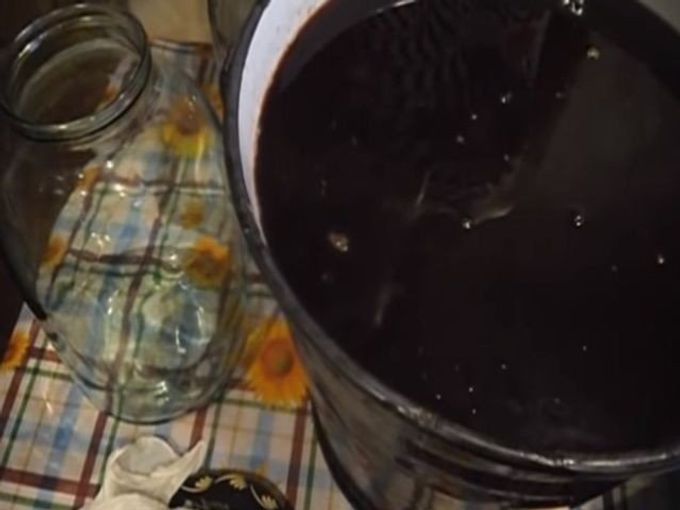
We pour the juice into jars, if there is a lot of it, we put a water seal. Pre-fill up with more sugar at the rate of 100 g per liter of the resulting juice. Fill the juice up to the very top. And we leave a little room for fermentation and gas release. We put on a glove (or a water seal) and put it in a dark, warm place.
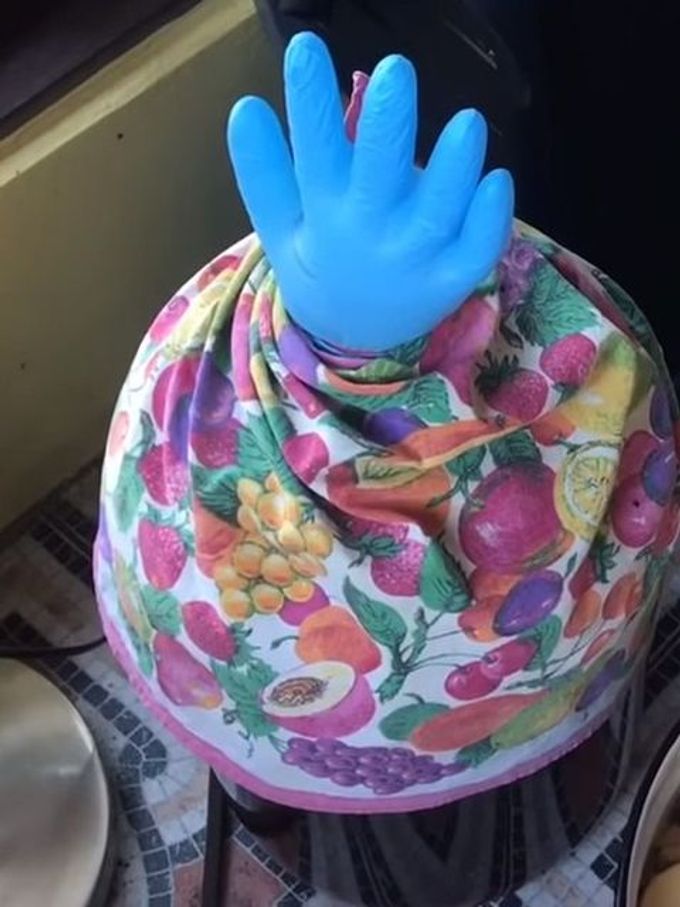
Temperatures should be between 18 and 26 degrees. So the wine will ferment for about two months. A dropped glove and the absence of bubbles will tell you exactly about the end of fermentation. Now the wine must be removed from the sediment. We do it with a silicone tube.
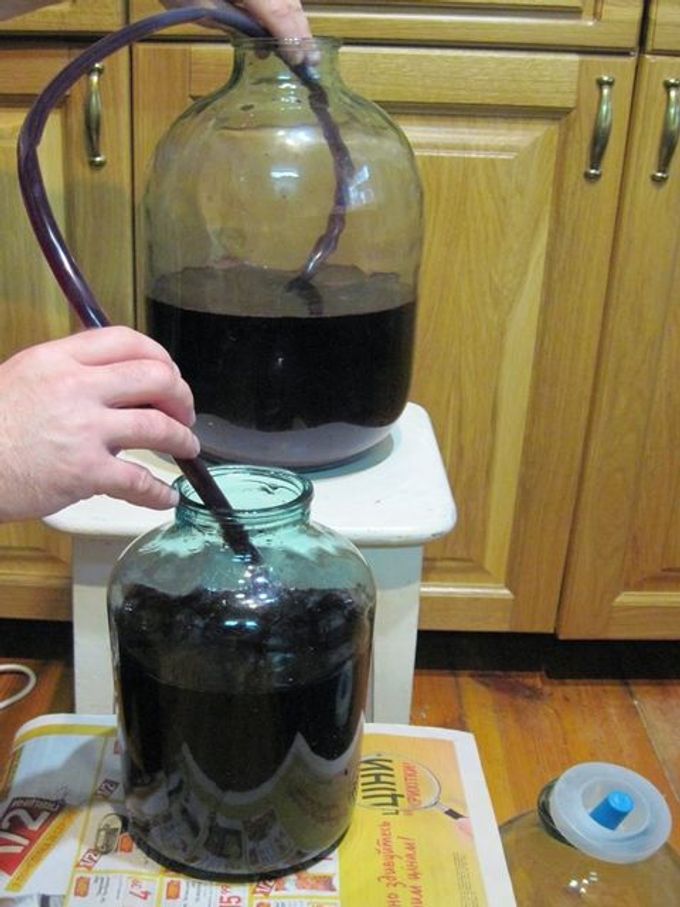
Now we try the wine, if it has little sweetness, add sugar. Some winemakers "fix" it with vodka or alcohol. But this is not at all necessary.
The next stage is the maturation of the wine. Pour it up to the very top of the bottles and tightly close the lids.
If you have a cellar, put it there, and so - in the refrigerator. But every 20 days we check and, if there is a sediment, remove it from it in the same way as we did before. The wine will mature for about three months. After that, the wine is sent to permanent storage.
Many advise to store it for no more than five years, but I think it will not “stale” for so long. On the very first holidays, you and your friends will drink everything without a trace!
Homemade plum wine with pit kernels, recipe with a glove
In this recipe, the preparation of also not quite ordinary wine will be considered. This wine is made from plums with pits. What is unusual here? The fact is that plum stones contain toxic substances, hydrocyanic acid and cyanide. Sugar will neutralize these substances. But, if when making wines only from plums, in some places it is possible not to strictly follow the rules of production, then in this option you should not deviate from them.
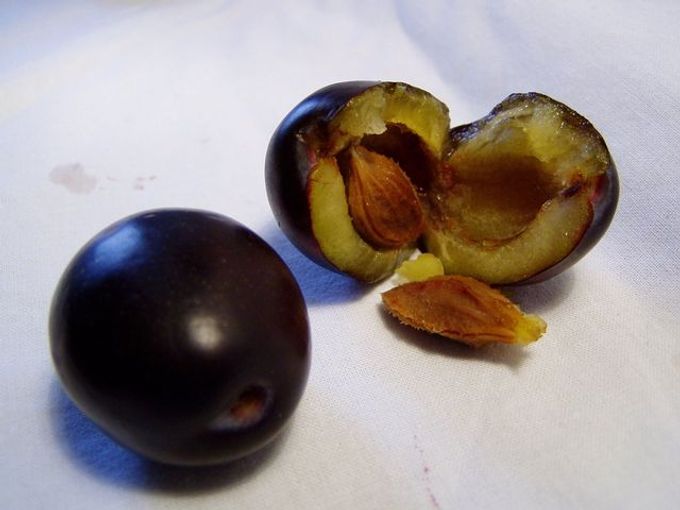
For this recipe we use:
- 10 kg plums
- 1 liter of water for 1 kg of plum pulp
- 150 g of sugar per 1 liter of must
Making wine from plums:
Accordingly, we transfer the calculation to the number of plums that you collect and use to make wine.
So, we collected the plum, now we sort it out, removing all the bad ones. Then we separate the bones from the pulp. We put the pulp itself in a container and knead it with our hands.
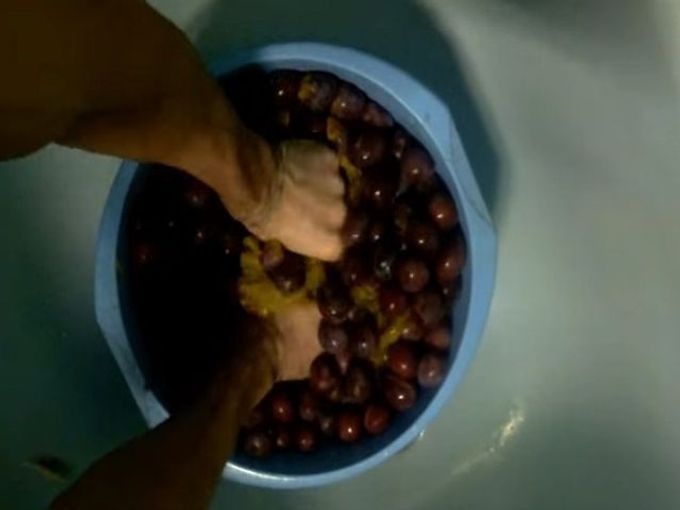
The result will be such a homogeneous mass.
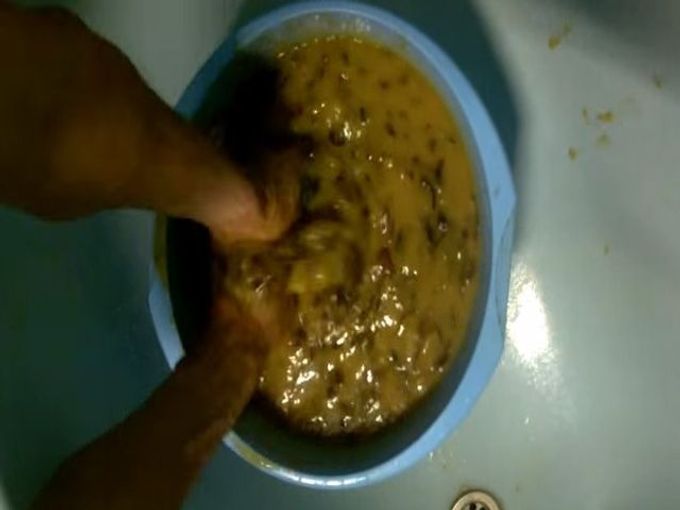
All selected bones are divided into two parts. We boldly throw away one part, but we extract the kernels from the second part of the bones.
Now let's prepare the container. It can be a glass jar, a plastic bottle, a bucket or an enamel pan.
In this container we put the mashed plum, seeds and fill it with water at the rate of 1: 1, sugar in the proportion of 50 g per liter of liquid with pulp.
Then mix everything thoroughly, close, depending on the type of container, a lid or gauze. We put the container in a dark and warm room, where the temperature is 19-23 degrees.
It will stay like this for three days. Periodically, twice a day, it is necessary to open the container in order to mix the rising hat. In this case, it is necessary to taste the liquid. If you feel an almond flavor, then all the kernels from the bones that are there must be removed.
If after five hours foam appeared on the surface of the wort, then the process is proceeding normally.
Three days have passed, we proceed to filtering. To do this, you need gauze, a sieve and a clean container. In gauze, we collect the cake located on top, wring it out and throw it away.
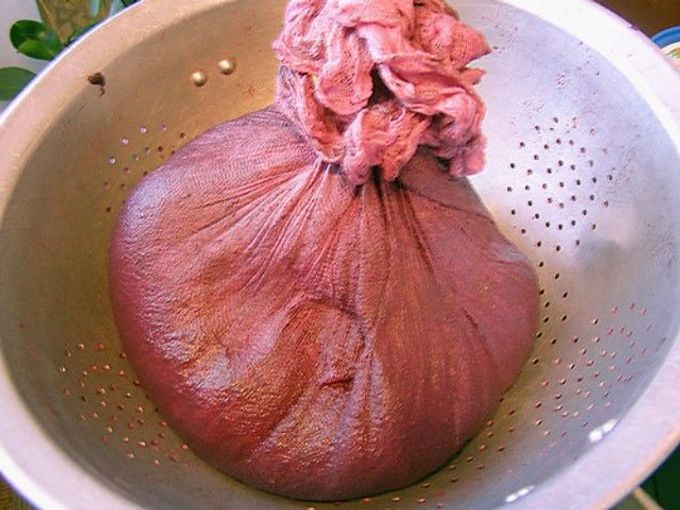
The remaining liquid is simply poured through a very fine sieve. If the sieve is large, then we first put gauze into it. At this stage, all remaining bones are removed. They played their part.
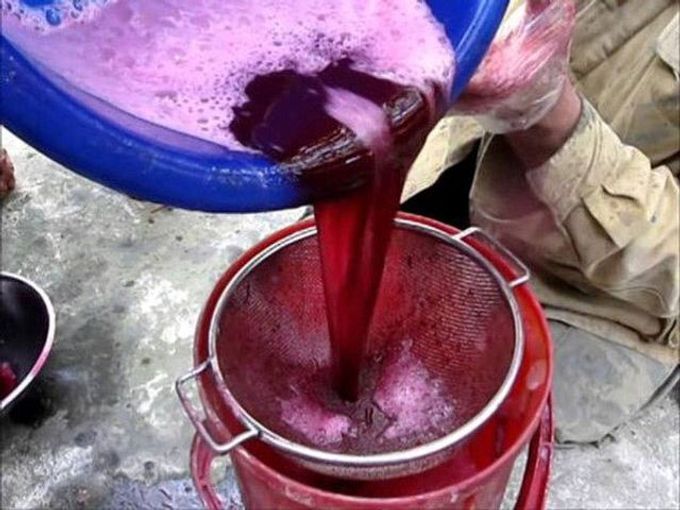
Pour more sugar into the strained wort at the rate of 50 g per 1 liter. After that, the liquid is poured into bottles or jars, where it will ferment. Wear a glove or water seal. Pour the liquid not to the very top, but leave room for fermentation.
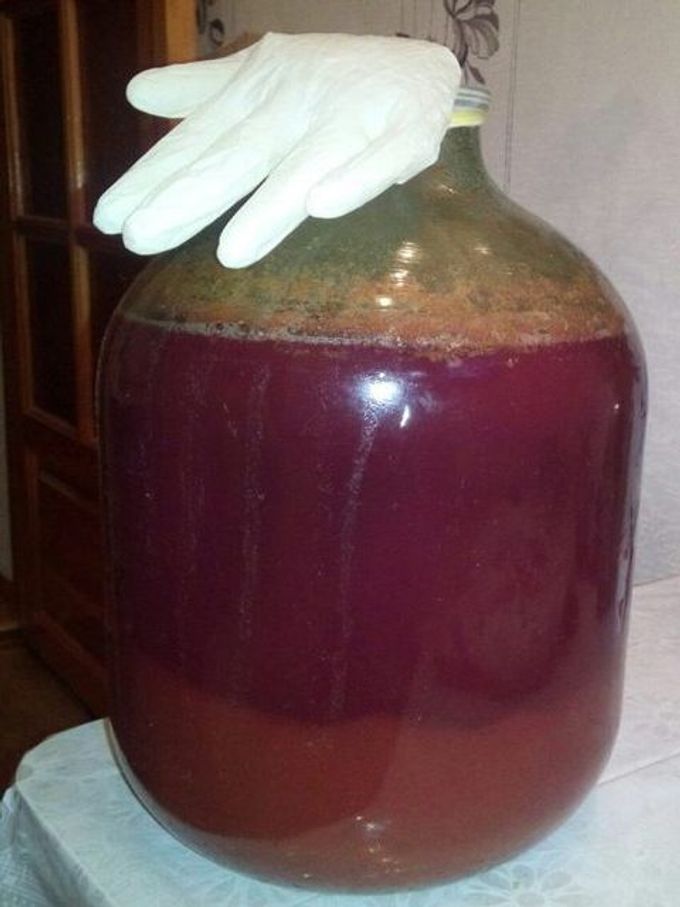
We remove the fermentation tank in a warm and dark room, but the optimum temperature is already slightly higher - 22-26 degrees.
After a few hours, the glove will rise - this means that the wort began to release gas, those, the fermentation process began. Everything is going as it should.
Now again it will be necessary to add sugar. This is done about 120 hours later, those five days after the start of fermentation. But we do not add it to the jar, but drain a little wort from there and put sugar in the same proportion: 50 g per liter of liquid.
If you have, say, 10 liters of wort, then pour 250 ml of liquid from it to make syrup and put 500 g of sugar there. We dissolve the sugar so that it is not at the bottom and pour it back into the bottle or jar. Close the container again with a glove.
All, leave until the end of fermentation. While the glove "sticks out" in this way, it means that the fermentation process is underway.
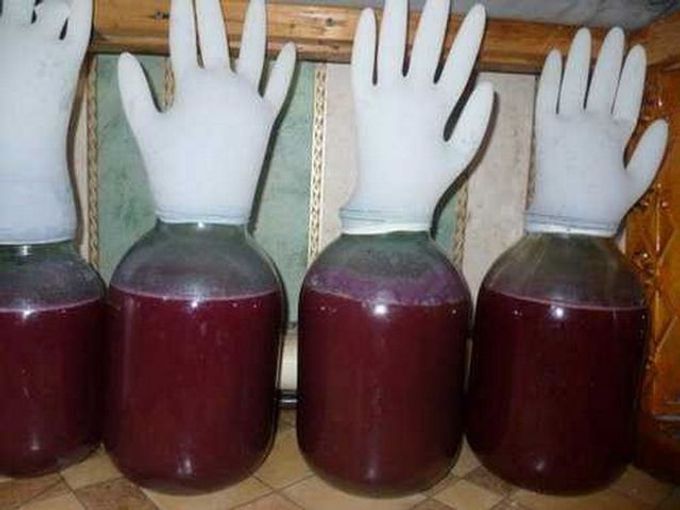
A dropped glove, the appearance of sediment, the absence of bubbles speaks of its end. On average, this process takes up to two months. But maybe even earlier. As soon as the fermentation is over, we proceed to the removal from the sediment.
To do this, take a tube, without lowering it to the sediment, pour the finished young wine into a clean container. Taste and add sugar if necessary. For a fortress, you can add alcohol, but, again, it is not necessary. Just in the future, he will not let you ferment again.
Further, the wine is bottled to the top, closed and put on maturation. At the same time, every 15 days we check for the presence of sediment. If it appears, then in the same way we remove it from the sediment and again put it on ripening. The entire process should take approximately two months.
At the end of this period, the finished wine is already bottled in glass bottles. Many winemakers have special figured bottles for this purpose.
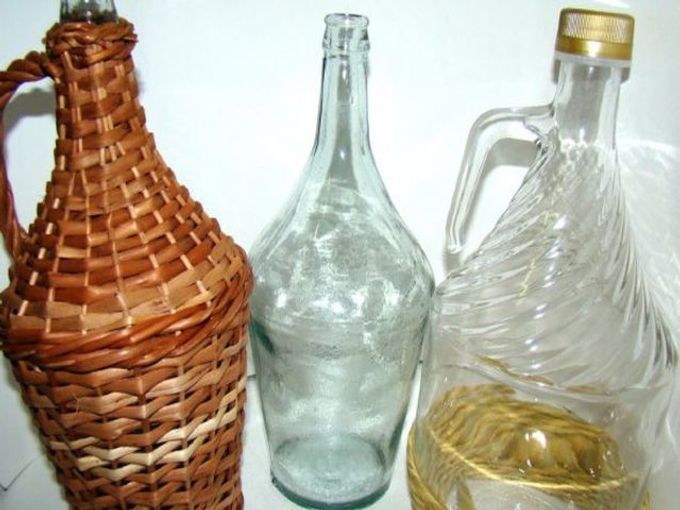
The wine spilled in this way is stored in the cellar or refrigerator.
The description of winemaking recipes in words is good, but sometimes, you can visually better understand the entire procedure for preparing the product.
The video below shows one of the fairly simple recipes for making plum wine.
How to make plum wine at home through a meat grinder
Here I will give another simple recipe for homemade plum wine, which differs from the previous ones in some production features.
As usual, the first thing we sort out the collected plum and remove the seeds from it. Then we pass the plum through a meat grinder to get mashed potatoes.
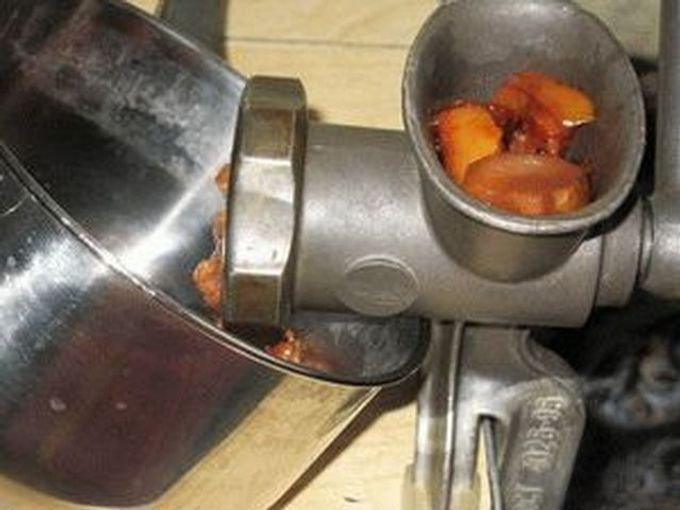
We put the plum ground in this way in an enameled bucket and pour water in a ratio of 1: 1. If the pressed plum came out 5 kg, then add 5 liters of water.
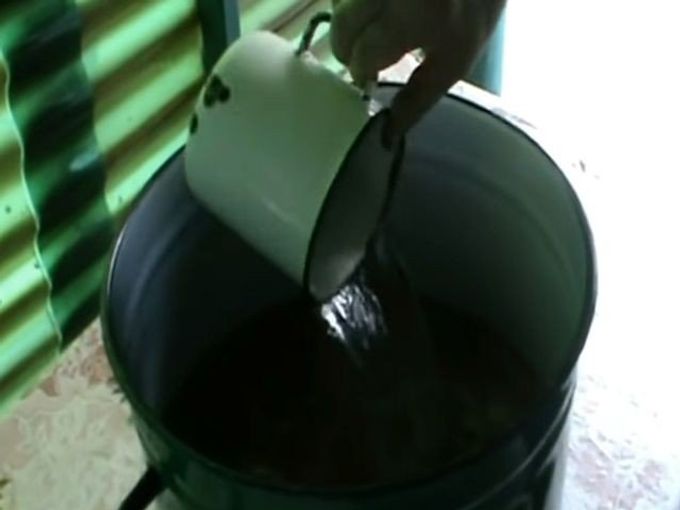
Now it remains to cover the bucket with gauze and leave it for three days.
Three days later, we open the bucket and see a raised hat from a solid mass of plums - cake, and under it is juice.
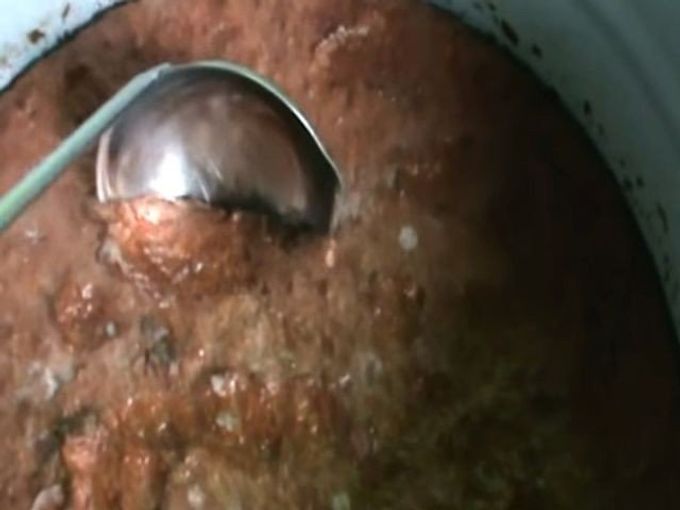
Now this mass must be separated from the juice and squeezed. We take a colander, put gauze on it and pour plum cake with a ladle.
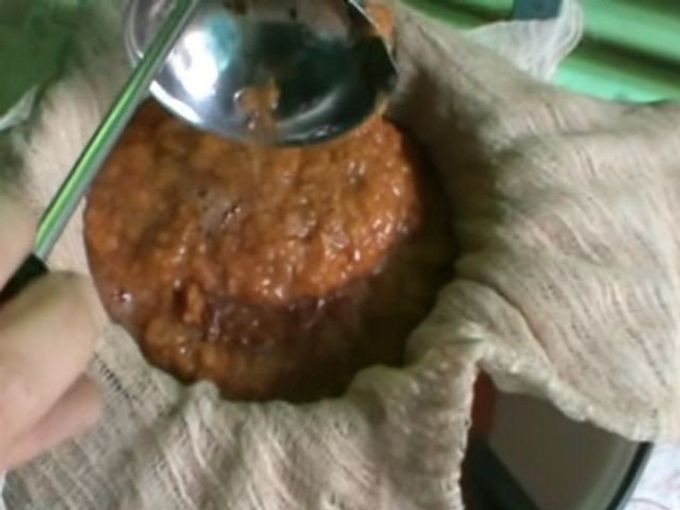
Poured a certain part. We turn the cheesecloth and squeeze it well over a colander.
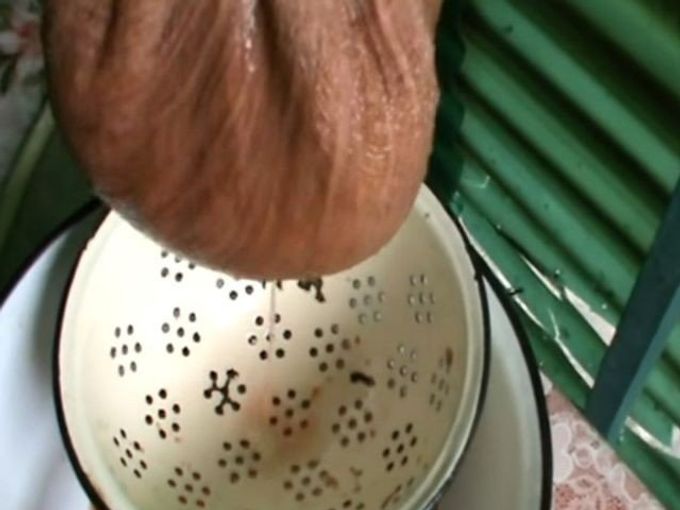
The juice obtained in this way is poured into a jar for further fermentation. We fill not completely, leaving a little space. Then put 1 kg of sugar into 8 liters of the resulting juice and stir well. Now we put on a rubber glove, not forgetting to pierce it, put it in a warm and dark place for fermentation.
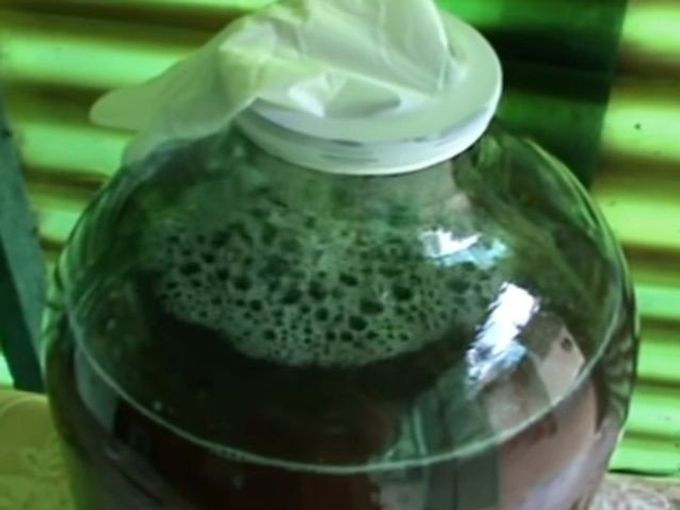
The very next day the glove should rise - so the process has begun. We are waiting for the fermentation to end, which means that the precipitate will fall out, the glove will fall.
You can begin to remove from the sediment. Using a straw, pour the wine into another container and taste it. If it is sour, add sugar, but not much.
Close tightly, put in a dark, cool place to ripen. Check back in two months. If there is sediment, we also drain it, and bottle the finished wine, put it away for storage.
How to make homemade yellow plum wine
There are a lot of varieties of plums, the most common are dark varieties. However, there is a yellow plum, which is no less tasty and fragrant. It is from this plum that we will make wine. We collect fruits from trees.
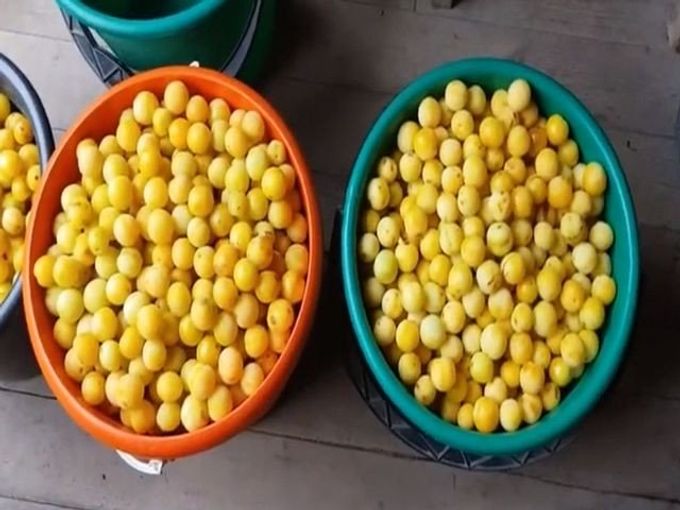
Then we iterate over them, removing the bad ones. After that, we divide the plum in half, and remove the seeds. Put the rest of the plum in a bucket. We take a pusher and knead it until a homogeneous mass. Then we pour everything into a fermentation bottle.
Now we are preparing the sugar syrup. If it turned out 10 liters of juice, then we take 300 g of sugar, dissolve them in 500 ml of water. Add to juice, add more water about the same as juice.
The main thing. So that in the container the volume of the liquid received does not exceed 2/3 of the volume of the bottle. We mix everything well, leave to ferment for three days. After this time, it is necessary to separate the fermented juice from the cake. Press the cake in the same way to get liquid from it. Drain all the juice into a container.
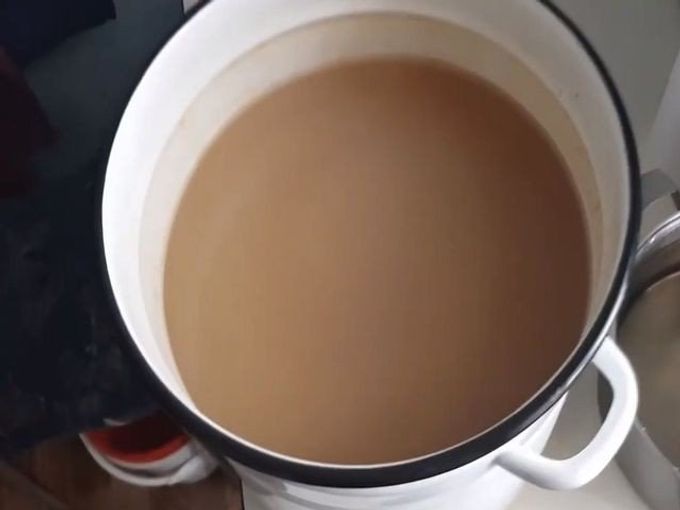
Then we dilute a kilogram of sugar in a liter of water, pour the resulting syrup into the wort. We check for sweetness, which would be normal, and not oversaturated. Here it is better to drain the syrup not all at once, but partially. If he stays, no big deal. We put a water seal and leave to ferment.
After the wine has fermented, a precipitate will fall out, bubbles will no longer appear, it will need to be drained.
We separate from the sediment and try again. If the wine is sour, you need to add so much sugar until you feel a sweetish taste. Now we put it under a water seal again - for the third fermentation. When it ferments for the third time, we also drain it from the sediment, taste it. If it is sour, add more sugar, but most often, it is ready after the third fermentation.
It remains only to pour it into bottles, close tightly and put away for storage. The technology for making wine from yellow plums is not much different from wines from other varieties, except that it is yellowish in color.
Cooking plum wine with pits at home recipe with a glove
Pitted plum wine has already been mentioned in the previous recipe. There is also wine from plums with pits, only using a different technology. If in the first version the bones were taken out and the kernels were taken out of them, which were used in the preparation of wine. There is no need to get the bones here. In addition, there are some nuances here, those cooking technology is somewhat different from the usual. But that's what makes it original.
What do we do. We take each plum and make an incision on it, put it in layers in a three-liter jar. Each layer is sprinkled with sugar. We put sugar at the rate of 50 g per kilogram of fruit.
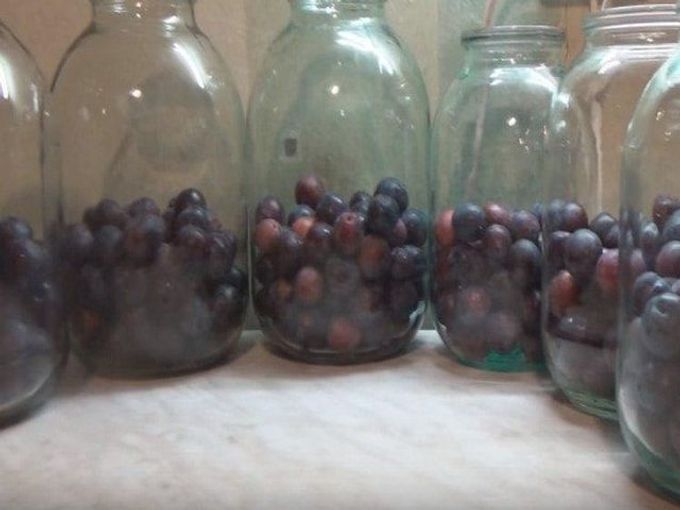
We fill the jar in this way to the very top and fill it with clean water. We close the jars with gauze, leave to stand in a warm room or in the sun for a week. During this time, the pulp will rise to the top, and the juice will remain below.
Now it must be separated from the pulp. First we take out the pulp, squeeze it, and filter the juice. Everything that turned out is poured into a clean container, which will go to fermentation.
The bones also served their purpose only at the first stage, and in the future only liquid will be needed.
But we don’t throw away the pulp, we need it. We put another wort on it, put plums, sugar and pour water there. You need the same amount of sugar as was in the first wort. The second wort stands for a week, after which we also filter it, squeeze the pulp. But now it can be thrown away. Add sugar to it at the rate of 50 g per liter of juice.
The first must at this time is already standing and fermenting. However, here sugar must be added more often.
50 g per liter of must on days 4, 7 and 10.
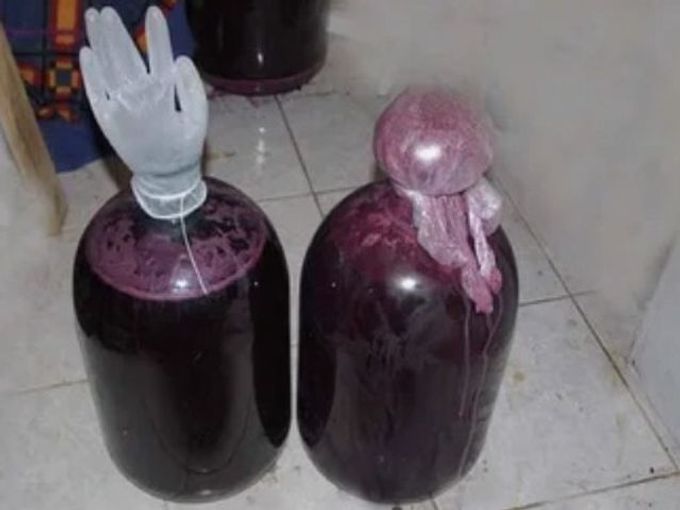
So both musts stand and ferment until this process is completed. Then they are drained and defended for three days. During this time, you can see the precipitate, and the wine itself will become somewhat lighter. Now both of these wines will have to be merged together - combined, as the winemakers say.
Pour both wines together and filter. After that, we bottle it, send it for maturation from two months to six months. It is already necessary to keep in a cool place: cellar or refrigerator. At the end of the prescribed period, you will get a good wine with a strength of about 15 degrees.
Here are some interesting options for making wines I would like to offer you. Try it and good luck to you!


Things to know (Q&A)
How do you make alcohol with fruit and sugar?
It works like this: Pick a juice with at least 20g of sugar per serving, add a packet of specially designed yeast , plug the bottle with an airlock, and wait 48 hours. Just like the fermentation process used in winemaking, the juice's natural sugar is converted into ethanol, with a byproduct of carbon dioxid
How long does homemade wine need to ferment?
The first, and most important, step is the fermentation process, which happens when the yeast eats sugar, either in the fermentables or that you've added, and converts it into alcohol. Fermentation takes roughly two to three weeks to complete fully, but the initial ferment will finish within seven to ten day
How do you make alcoholic wine at home?
Making Wine
- Ensure your equipment is thoroughly sterilized and then rinsed clean. …
- Select your grapes, tossing out rotten or peculiar-looking grapes.
- Wash your grapes thoroughly.
- Remove the stems.
- Crush the grapes to release the juice (called "must") into the primary fermentation container. …
- Add wine yeast.
What alcohol is made from plums?
Slivovitz, slivovitza, slivovitsa, sliboviță, šljivovica, śliwowica, Schlivowitz, slivovice, slivovica or slivovka is a fruit spirit (or fruit brandy) made from damson plums, often referred to as plum spirit (or plum brandy).
What is plum alcohol?
Plum Wine or Umeshu (梅酒) is a Japanese liqueur made by steeping fresh Japanese plum (ume) in shochu/white liquor and sugar. The sweet and sour flavors with the fruity aroma are very appealing and you can make many kinds of drinks with it! Inspired by the Japanese drama — Midnight Diner.
What is plum brandy called?
Slivovitz
What Is Slivovitz ? Slivovitz is a clear fruit brandy (made in a style known as eau de vie) distilled from damson plums.
What is plum wine called?
umeshu
“Plum wine, or umeshu , is a liqueur made by steeping ume, or the Japanese plum, in some sort of liquor,” says Justin Park, co-owner/head bartender of Bar Leather Apron in Honolulu.
What kind of alcohol is slivovitz?
Slivovitz is a type of high-proof plum brandy that was popular with Jewish grandfathers because it's not only kosher, but since it contains no grain, it's also kosher-for-Passover (which is, like, extra kosher.)