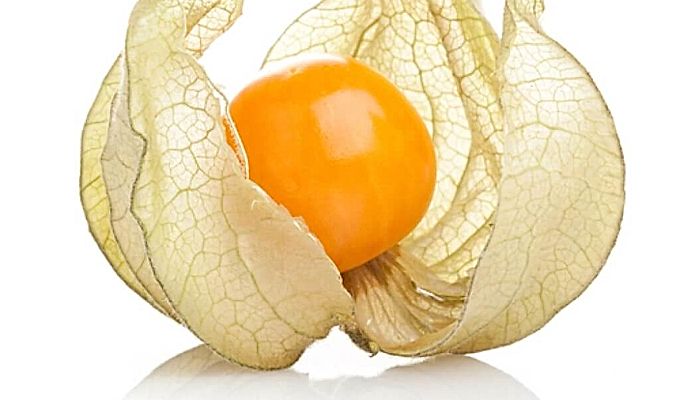
 Physalis is a perennial herb of the Solanaceae family, which is popularly referred to as marunka, pesa cherries, bubble worms, earthen cranberries and emerald berries. The greatest species diversity is found in Central and South America. In total, there are 115 varieties of physalis, which are divided into decorative and wild, vegetable and strawberry varieties. The natural properties of the plant are similar to those of tomatoes.
Vegetable Mexican physalis (varieties "Confectioner", "Korolek", "Ground Gribovsky") is larger than strawberry. It is resistant to low temperatures, has a high yield, and ripens quickly. The vegetable bubble wort contains a minimum of dry matter, so freshly picked fruit does not taste very good. At the same time, it exhibits the following beneficial properties: anti-inflammatory, choleretic, diuretic, analgesic, hemostatic.
- Description
- Influence on the body
- How to eat
- Application in medicine, cosmetology
- Cooking applications
- Conclusion
Strawberry (Peruvian) physalis unprocessed is tasty due to the high dry matter content of the fruit. Used for making jams, marshmallows, preserves.
Other edible physalis species: pubescent (raisin), Florida. They have very sweet but less aromatic fruits.
Description
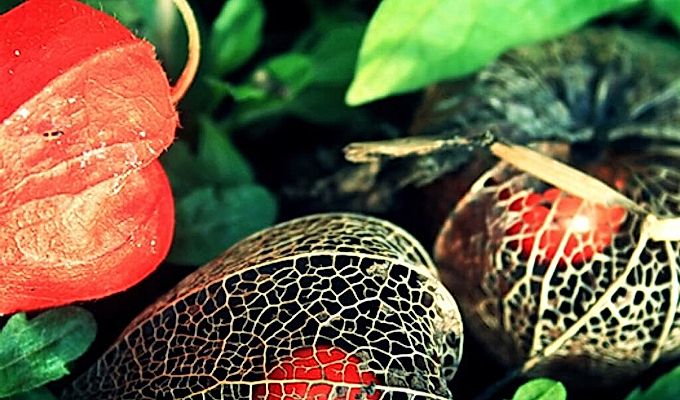
Physalis owes its name to the spherical shape of the berry, which is placed in a voluminous orange cup with a bubble-like configuration. "Fizeau" in translation from Greek means "bloated". The flowering period of the plant occurs in May-August, and the harvest of fruits - in June-September.
 Physalis is cultivated in Central Asia, the Baltic States, the Mediterranean countries and the Caucasus. It is interesting that in Europe the tomato “brother” has not gained wide popularity and in 85% of cases is used as a decorative element for decorating a herbarium.
The height of the plant reaches 100 centimeters, the shoots are woody, strongly branching, and are located underground. Physalis stems are curved at an angle, located vertically relative to the soil. Fruits are juicy, globular, saturated red or orange, inside a protective cup. Their size does not exceed 12 millimeters in diameter, and weighs 9 grams. The leaves of the marunka are thin, opposite to ovoid configuration with whole-cut toothed edges. Physalis can be found wherever there is a wooded area with forest edges, ravines, and bushes.
The fruit of an earthen cranberry is comparable to cherry tomatoes, slightly sour in taste, reminiscent of a candied lemon, full of tiny seeds. The berry is consumed mainly in dried form, its size is slightly larger than the raisin.
Influence on the body
According to experimental studies, it has been established that physalis has the following medicinal properties:
- pain relievers;
- antitussives;
- hemostatic;
- antiviral;
 antibacterial;
 - anti-inflammatory;
- antioxidant;
- cleansing;
- choleretic;
- diuretics;
- immunoactive.
The healing properties of pemphigus are due to the unique chemical composition, represented by the following active substances: fizalin, tannin, cryptoxanin, pectin, sapononins, flavonoids, polyphenol, vitamins A, C, B1, B2, B6. Organic acids (tartaric, malic, succinic, synapic, palmitic and stearic), minerals (magnesium, iron, zinc, phosphorus, potassium, calcium). Ripe fruits contain tanning, coloring components, carbohydrates, proteins, fiber, fatty oils.
A decoction of physalis roots is used to normalize the menstrual cycle. Water infusion of fruits - to relieve swelling, the effects of bruises (as compresses), eliminate cough in case of colds.
Physalis fruits are used to treat:
- gout;
- dropsy;
- depriving;
- rheumatism;
- bronchitis;
- inflammatory reactions of the urinary tract;
- diseases of the respiratory system.
Freshly squeezed pebbles juice helps with gonorrhea, hypertension, dermatoses, dysentery.
Beneficial features:
- improves intestinal motility;
- removes excess fluid, heavy metal salts and toxins from the body;
- strengthens bones, tooth enamel;
- supports the work of the heart muscle, circulatory system;
- fights viral infection, strengthens the immune system;
- relieves swelling of the upper respiratory tract;
- normalizes blood pressure, acid-base balance;
- improves digestion, metabolism.
Contraindications - diseases of the digestive system.
How to eat
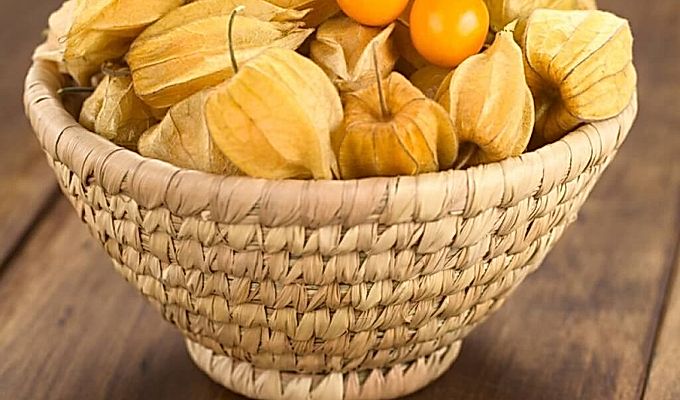
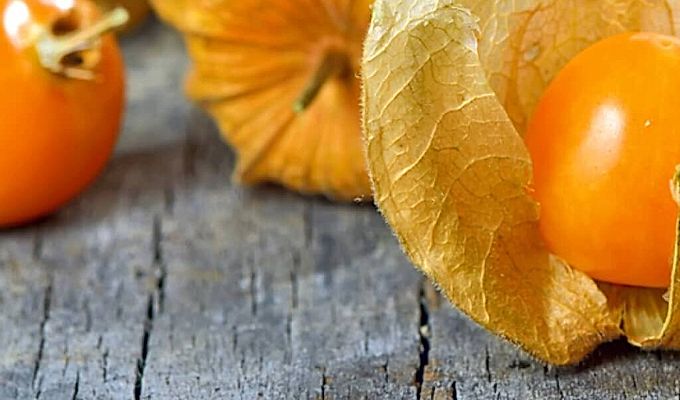 Physalis fruits are useful fresh and processed. They make vitamin preparations for the winter, jams, juices, caviar. Berries are added to salads, main courses, canned food. In addition, they are dried, baked and dried. Boiled fruits are used as a dressing (seasoning) for vegetable soups.
Before use, the fruits must be doused with boiling water so that a wax-like sticky bloom comes off their surface. Ripe berries have a sweet taste with characteristic bitterness and sourness.
Remember, you need to start using the product with two or three pieces, monitor the reaction of the body. If tolerated, gradually increase the number of berries. The ground parts of the plant (leaves, caps, stems) are poisonous. Therefore, it is worth using them for medical purposes only under the supervision of a doctor, in strictly established doses, so as not to harm health.
Application in medicine, cosmetology
For medicinal purposes, exclusively ripe fresh berries are used. One-time reception - from 10 to 15 pieces of small fruits or from 4 to 8 large ones. Berries are consumed 10 - 15 minutes before the main meal. With increased acidity of gastric juice, the number of fruits is halved. In folk medicine, physalis is used to alleviate the condition of patients suffering from chronic cholecystitis, hypertension, diabetes mellitus, constipation, and anemia. For prophylactic purposes, it can be consumed by everyone who does not have digestive problems. This is an excellent multivitamin product.
 Physalis decoction
To prepare a healing drink, combine 20 grams of dry fruits with 400 milliliters of boiling water, put on the stove, cook for 15 minutes. Remove the broth from heat, leave for 1 hour, strain. Take 50 ml 3-4 times a day.
The resulting drug is used as a pain reliever, to improve kidney function, treat rheumatism, eliminate laryngitis, bronchitis, flu. On its basis, compresses are made to relieve inflammation, dermatitis.
Physalis is used in cosmetology to combat acne. To improve the condition of the skin, soak gauze in the resulting broth, apply it on the face, bypassing the area around the eyes, for 15 minutes.
Perform this procedure every day for three weeks.
Physalis ointment
Grind the fruits, pour 10 grams of the resulting raw material with olive oil (40 milliliters), mix, leave for 21 days. Use for rubbing with rheumatism, as well as areas with inflammation.
Physalis juice
It is used as a choleretic agent, to lower blood pressure, treat cystitis, kidney stones. Due to the high concentration of essential substances, the juice is a powerful drug. The daily dose should not exceed 30 milliliters per day. Take once a day before meals.
Cooking applications
For processing physalis, both immature and ripe fruits are equally suitable.
 The berries are salted, soaked and pickled. On their basis, candied fruits, caviar, jam, preserves, mashed potatoes are prepared. Regardless of the method of processing, the marunka fruits are cleaned of caps, washed under hot water, and sticky, waxy components that have an unpleasant odor and bitter taste are removed from the surface.
Physalis soaked
Place the peeled buds in sterilized glass jars in layers with spices. Suitable as an aromatic additive: horseradish root (5 grams), red capsicum (1 gram), garlic (3 grams), basil (5 grams), black currant leaves (15 pieces), celery (3 grams). For 1 kilogram of physalis, the total mass of spices should not exceed 50 grams.
The next step is to prepare the brine. Mix 1 liter of water with 60 grams of sea salt.
After that, fill the containers with fruits with a solution, close with a wooden circle, set a little oppression on top, leave for 10 days in a warm room. During this period, physalis will begin to ferment with the formation of lactic acid. Mold on the surface of the containers is removed. When the brine tastes sour, it is poured into a saucepan, boiled, re-poured into jars of fruits, rolled up, cooled.
Physalis pickled
Rinse the bubble wort and immerse in boiling water for 1 minute, then cool and place tightly in sterilized glass jars, on the bottom of which place the spices. For pickling physalis (for one half liter container) you will need: cloves - 4 branches, garlic - 2 cloves, vinegar 9% - 5 milliliters, sugar - 10 grams, salt - 5 grams, allspice - 4 peas, bay leaf - 2 pieces, cherry leaves, currants - 10 pieces each. Dill - 3 branches.
Boil the cloves in water, cool the solution, add salt and sugar. Fill jars of fruits and spices with hot marinade dressing, cover with a boiled lid, sterilize for 10 minutes, roll up. Store in a cool place. To complete the marinating, jars with physalis are not recommended to be uncorked earlier than 2 months later. At room temperature, the cooking process will go faster, and the buds of the earthen cranberries will be ready for consumption within a month.
 Vegetable caviar
Ingredients:
- Physalis fruits - 1 kilogram;
- onions - 300 grams;
- carrots - 400 grams;
- sugar - 5 grams;
- vegetable oil - 60 milliliters;
- salt, pepper - to taste.
Cooking principle:
Vegetable caviar is served as a separate dish or a side dish for meat or fish products.
 Jam
Jam
Ingredients:
- sugar - 500 grams;
- physalis - 1 kilogram;
- water - 500 milliliters;
- cinnamon - 1 stick;
- citric acid - 1 gram.
Cooking method:
To make jam, physalis jam is rubbed through a sieve, if necessary, a gelling agent (agar-agar, pectin, gelatin, starch) is introduced.
Interestingly, blanched bubble wort puree (without added sugar) is used to make jelly candies, apple marmalade, and pastilles.
Conclusion
Physalis is a medicinal plant with sweet and aromatic fruits that has analgesic, diuretic, anti-inflammatory effects on the human body. On the basis of berries, medicinal decoctions, infusions, ointments are prepared that stop bleeding, cope with gout, articular rheumatism, hemorrhoids, pathologies of the liver, intestines, and organs of the urinary system.
Edible varieties of physalis are used in cooking: they make jams, preserves, compotes, candied fruits, and vegetable caviar. Marunka buds are baked, dried, pickled, dried, boiled.
Fresh and dried physalis fruits are used for therapeutic purposes to combat hypovitaminosis and inflammatory reactions. They contain pectin, healthy fatty oils, organic acids (tartaric, coffee, citric, sinapic, malic, succinic, furolic), vitamins A, C, B1, B2, B6 and minerals (magnesium, iron, zinc, phosphorus, potassium, calcium).
Hound cherry is an unpretentious plant that is grown from seeds and seedlings. The best precursors for planting are cabbage or cucumbers. It is not recommended to plant physalis after peppers, potatoes, eggplants and tomatoes, since they suffer from the same diseases. The plant branches strongly, so it is better to arrange it in a checkerboard pattern, keeping the "distance" between the bushes - 50 centimeters.
How to understand the fruit is ripe or not?
First of all, carefully examine the box. A ripe physalis has a stretched and dry cap, and ripe berries crumble to the ground. They taste like a tomato. Green fruits contain many organic acids, which give the berries their characteristic sourness.
Interestingly, physalis branches are used for decorative purposes to create a herbarium and decorate an apartment before the new year.
Things to know (Q&A)
Are any Physalis poisonous?
Solanine, a tropane alkaloid with toxic properties similar to atropine. All species of Physalis are potentially poisonous until proven otherwise . … This is rarely a problem toxic plant, although some species of Physalis can become quite invasive in some pastures or waste areas and pose a risk to animals.
Can you eat all physalis?
Physalis is a versatile fruit that you can eat raw, cooked, or in the form of jams or jellies . It is a rich source of vitamin C, antioxidants, and other nutrients.
What does physalis taste like?
A ripe physalis has a sweet-tart taste that is slightly reminiscent of pineapple .
Can Physalis grow in the UK?
The Chinese Lantern Plant (Physalis alkekengi) is a hardy, perennial (grows year after year) plant when grown in the UK. … They are fully hardy in the UK even when grown in containers.
Are all Physalis species edible?
Not all Physalis species bear edible fruit . Select species are cultivated for their edible fruit, however; the typical Physalis fruit is similar to a firm tomato in texture, and like strawberries or pineapple in flavor, with a mild acidity.
Can I eat Physalis fruit?
Physalis is a versatile fruit that you can eat raw, cooked, or in the form of jams or jellies . It is a rich source of vitamin C, antioxidants, and other nutrient
Is Physalis Angulata poisonous?
Physalis angulata L.
Its fruit is edible and used medicinally in South America; extracts of the fruit have anti-imflammatory properties. Other parts of the plant are poisonous , as with many members of the nightshade family.
Is lantern plant poisonous?
The Chinese lantern plant is named because of the bright orange to red papery covering over its fruit, which looks like a Chinese lantern. All parts of this plant are listed as poisonous , although the ripe fruit and very young leaves are used in herbal medicine.
How do you eat Physalis?
The following are a few other ways to enjoy physalis fruit:
- Open the outer wrapping to expose the berry and carefully arrange on top of pavlovas, cakes, or cupcakes.
- Combine the berries with sweet fruit, such as bananas, in a refreshing smoothie.
- Peel back the wrapping and dip the fruit into melted chocolate.
Are Physalis related to tomatoes?
Another Physalis, The Tomatillo , Jamberry, Mexican Husk Tomato, P. Ixocarpa is similar in every way but bigger fruited with a purple or yellow green tomato in a husk which becomes stretched around the swollen midriff like an over tight cardigan.
Is a Physalis edible?
The flavour of this small round berry might remind you of pineapple, with a hint of acidity. The fruits are ripe when they colour orange-yellow. The seeds inside are edible . The distinctive feature of the physalis is its appearance.
What does golden berry taste like?
Golden berries have a tart, tangy taste similar to tropical fruits . The golden berry goes by many names, including the Cape gooseberry, poha berry, husk cherry, pichu berry, aguaymanto, topotopo, Inca berry, and Peruvian groundcherry.
Can you grow cape gooseberries in England?
Cape gooseberries do better in more northern sections of the UK if they are grown under cover in a polytunnel or greenhouse. They are good for growing in pots and as long as the soil they are in is free-draining, they do not really mind if it is low in nutrients. … Cape gooseberries can be grown fairly easily from seed.
Is Physalis easy to grow?
A very easy plant to grow , physalis bears edible fruits that are uniquely tasty at summer's end.
How do you grow cape gooseberries in the UK?
Sowing/Planting
Cape Gooseberries are usually grown from seed . Sow the seed in March in trays of compost, in gentle heat. Pot on into 3" pots when two leaves have formed and then, when large enough, plant out